Question de voyage
Blogs de voyage sur Curaçao : ce qui est dépassé et ce qui reste valable
Rédigé à partir de récits de voyageurs
Traduit automatiquement de l'anglais · Voir l'original
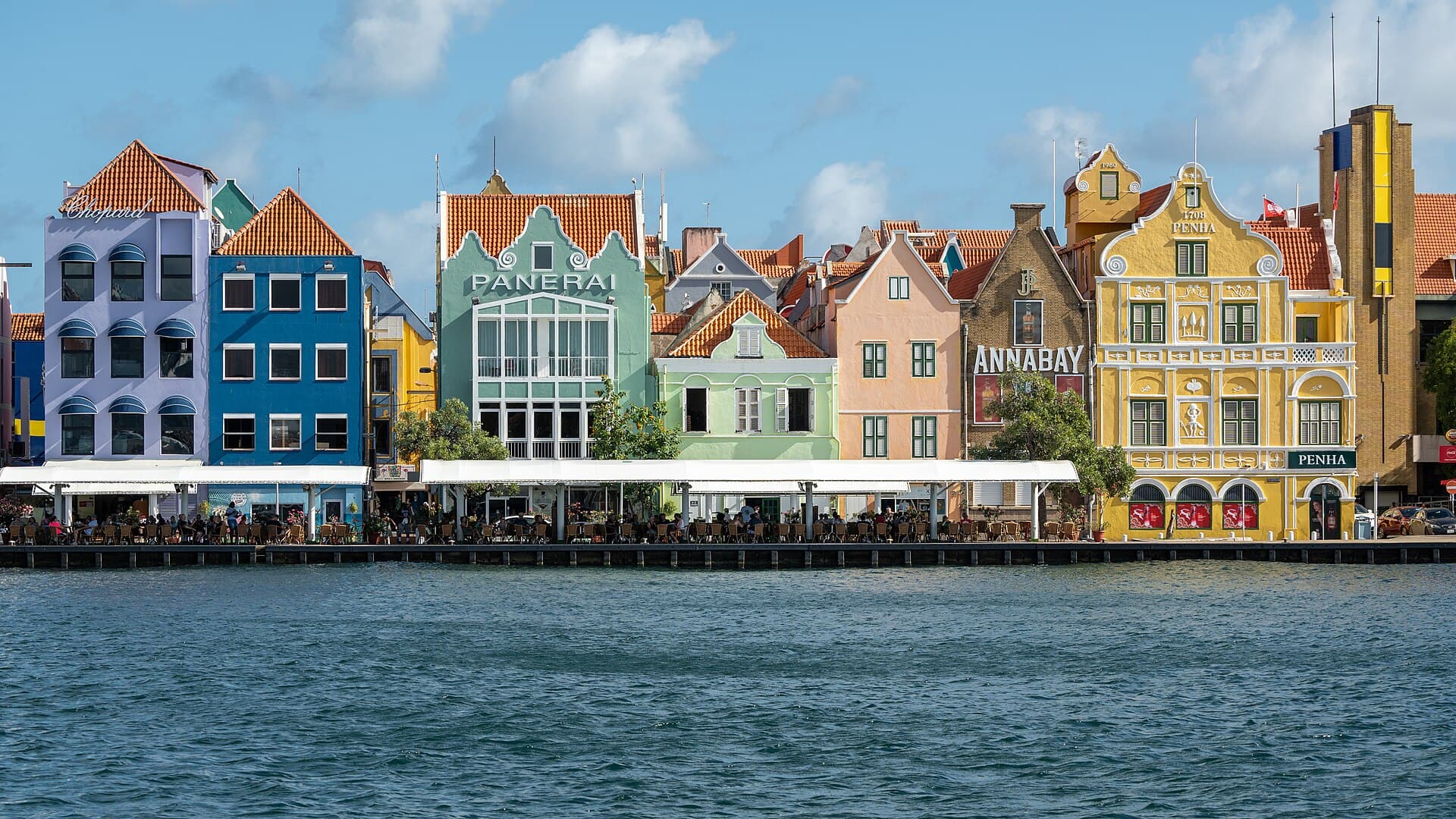
Photo: Fraganda, CC BY-SA 4.0
Most Curaçao travel blogs still get the big picture right: rent a car for the west-coast coves, snorkel from the shore and never leave anything in the car. What dates them is the small print. The currency changed in 2025, the government warned in 2026 that Uber rides are illegal, an entry tax is planned for 2027, and look-alike sites now charge for the free arrival card.
Money: prices in NAf mean the post predates the 2025 switch
Since 31 March 2025, Curaçao has paid in the Caribbean guilder, written Cg (code XCG), so a post that quotes prices in NAf, ANG or Antillean guilders was written before the switch.
The changeover. Both currencies circulated until 30 June 2025, and the old guilder stopped being legal tender on 1 July 2025, according to the central bank's Caribbean guilder site. The peg didn't move: US$1 is still Cg 1.79, so an old price converts at the same rate. It's just an old price.
Leftover notes. If you kept Antillean guilders from an earlier trip, the commercial banks' exchange window, which only served their own account holders, closed on 31 March 2026. The Centrale Bank van Curaçao en Sint Maarten (CBCS) will still exchange them until 31 March 2055.
Dollars still work. The Curaçao Tourist Board says you can pay in US dollars everywhere, though change usually comes back in guilders. Euros can't be spent; you can only exchange them at a bank.
Arrival: the immigration card is online only
Since 1 October 2019 every visitor flying into Curaçao, children included, has had to fill in the Digital Immigration Card (DI card) online, so a post that describes a paper card handed out on the plane is older than that.
How it works. The portal the Curaçao Tourist Board points visitors to, dicardcuracao.com, accepts the card in the 7 days before your departure, one card per person per trip. Your airline checks the confirmation at check-in, and immigration can ask for it on arrival. The tourist board accepts a copy on your phone or a printout, but Naar Curaçao, a Dutch-run island site, says to print it, so carry both.
Avoid the look-alikes. The card is free on that portal, but in December 2025 the Curaçao Chronicle reported travelers paying tens of euros to sites posing as official ones, and one traveler who paid through iDEAL found the bank could do little to get the money back. Naar Curaçao says these agencies charge €20 to €50 a person or more and buy ads at the top of Google, so type the address in yourself.
An entry tax is coming. Curaçao's 2026 national budget plans a tourist entry tax from 1 January 2027, the Curaçao Chronicle reported in August 2026. A 2025 government plan described a fixed fee that would replace the 7 percent lodging tax on overnight stays, but as of August 2026 the amount and any exemptions hadn't been announced, so treat any figure you see quoted with suspicion.
Favorites that changed: turtles, the floating market and Uber
Some of the most repeated Curaçao tips now come with new rules or a smaller reality.
Turtles at Playa Piskado. If a post sends you to Playa Piskado to swim with the turtles, go with newer advice in mind. In February 2025 WWF warned about a growing trend of people luring and touching the turtles there, and shared a video of a local resident steering a turtle toward a tourist for money. Sea Turtle Conservation Curaçao says some turtles become dependent on people and gain too much weight. Don't feed, touch or chase them, keep your distance, and don't pay anyone to bring one closer.
The floating market. The Venezuelan fruit boats that made the market on Sha Caprileskade famous stopped coming in January 2018, and the border stayed closed for five years. When two boats returned in May 2023, the economy ministry reserved 10 of the market's 30 stalls for five Venezuelan boats and opened the other 20 to local vendors. The market was still running in October 2025, when the ministry announced separate vendor and walking zones on the quay, but no newer count of the boats could be found, so expect a smaller, more local market than older photos show.
Uber. In July 2026 the government warned that paid rides through Uber are illegal, because drivers need a government permit. For taxis, buses and when a rental pays off, see Do You Need a Car in Curaçao?
Museums on old lists. Our guide couldn't confirm that Museo Tula or the Den Paradera herb garden are open, so check before driving out; the skip or swap section has the details.
What the older blogs still get right
The core advice that runs through traveler reports and island blogs has held up, and it matches what the research for our guide found.
A car for the coves. The best beaches are small coves along the west coast, 30 to 60 minutes' drive from Willemstad, and buses out there leave only every couple of hours.
Shore snorkeling, not long beaches. The good swimming is in rocky-entry coves such as Playa Lagun and Playa Jeremi, so bring water shoes and your own snorkel gear.
An empty car and a cruise calendar. Break-ins at beach parking lots are still the most common complaint, and cruise days still crowd Willemstad and the southeast beaches; the guide's common mistakes cover both.
The coves, food stops and day-by-day plans built on all of this are in our Curaçao travel guide.
How to check a Curaçao post before you trust it
Look at the date first, then check anything with a price, a rule or opening hours against a source that is kept current.
Red flags. Prices in NAf, an immigration card filled in on paper, or Uber suggested as a way to get around all mark a post as older than the changes above.
Where to check. Use the central bank's Caribbean guilder site for money, dicardcuracao.com and the Curaçao Tourist Board's question pages for arrival rules, the Curaçao Ports Authority's cruise schedule for ship days, and the Curaçao Chronicle, an English-language island news site, for anything that changed this year, including the entry tax.
Vous préparez Curaçao ?
Lancez-vous dans un voyage à Curaçao sans frais avec les criques de la côte ouest et les étapes à Willemstad du guide, vérifiées en octobre 2026, puis organisez vos journées à partir de là.
Réponses rapides
Can I still pay with Antillean guilders in Curaçao?
No. The Netherlands Antillean guilder stopped being legal tender on 1 July 2025, so shops can't take it. Commercial banks exchanged old notes for their own account holders until 31 March 2026; now only the central bank, CBCS, exchanges them, until 31 March 2055.
Do I have to pay for the Curaçao DI card?
No. The card is free on the official portal, dicardcuracao.com. Sites that charge a "service fee" aren't official, and the Curaçao Chronicle reported in December 2025 that travelers were paying tens of euros to them.
Can I use US dollars in Curaçao?
Yes. The Curaçao Tourist Board says US dollars are accepted everywhere, though you'll usually get change in guilders, and shops may use a rounded rate rather than the official US$1 = Cg 1.79. Euros can't be spent, so exchange them at a bank.
How much is Curaçao's new tourist entry tax?
It hasn't been announced. The 2026 national budget plans the tax from 1 January 2027, but as of August 2026 the government hadn't set the amount or said who would be exempt. An earlier plan had it replacing the 7 percent lodging tax on overnight stays.
Quand partir, où dormir, quoi éviter : tout le reste est dans le guide de voyage de Curaçao.
Plus sur Curaçao
Sources et méthode de cet article
I haven't been to Curaçao yet. This article is built from Curaçao's central bank, the official DI card portal, Curaçao Tourist Board pages, an island specialist site and local news reports, plus the traveler reports behind our Curaçao guide, checked on 2 November 2026. Rules and fees change, and the 2027 entry tax hasn't been set, so confirm them before you travel.
Caribbean guilder: frequently asked questions (Centrale Bank van Curaçao en Sint Maarten)
CBCS confidently awaits the introduction of the Caribbean guilder (Curaçao Chronicle, March 2025)
Will USD or EUR be accepted in Curaçao? (Curaçao Tourist Board)
Digital Immigration Card portal (DI Card Curaçao)
What is the Digital Immigration Card? (Curaçao Tourist Board)
Curaçao's immigration card goes fully digital (Curaçao Tourist Board, October 2019)
Digital Immigration Card frequently asked questions, 2019 PDF (DI Card Curaçao)
DI Card Curaçao: arrange it yourself, free (Naar Curaçao)
Curaçao government plans to introduce entry tax for visitors (Curaçao Chronicle, August 2026)
Return of fruit boats: a revival in city center life (Curaçao Chronicle, May 2023)
Curaçao government warns that Uber services are illegal (Curaçao Chronicle, July 2026)
Get the next trip guide
New destination guides and videos, roughly monthly. No spam, unsubscribe anytime.