Question de voyage
Cusco et le Machu Picchu : combien de jours prévoir et dans quel ordre les visiter
Rédigé à partir de récits de voyageurs
Traduit automatiquement de l'anglais · Voir l'original
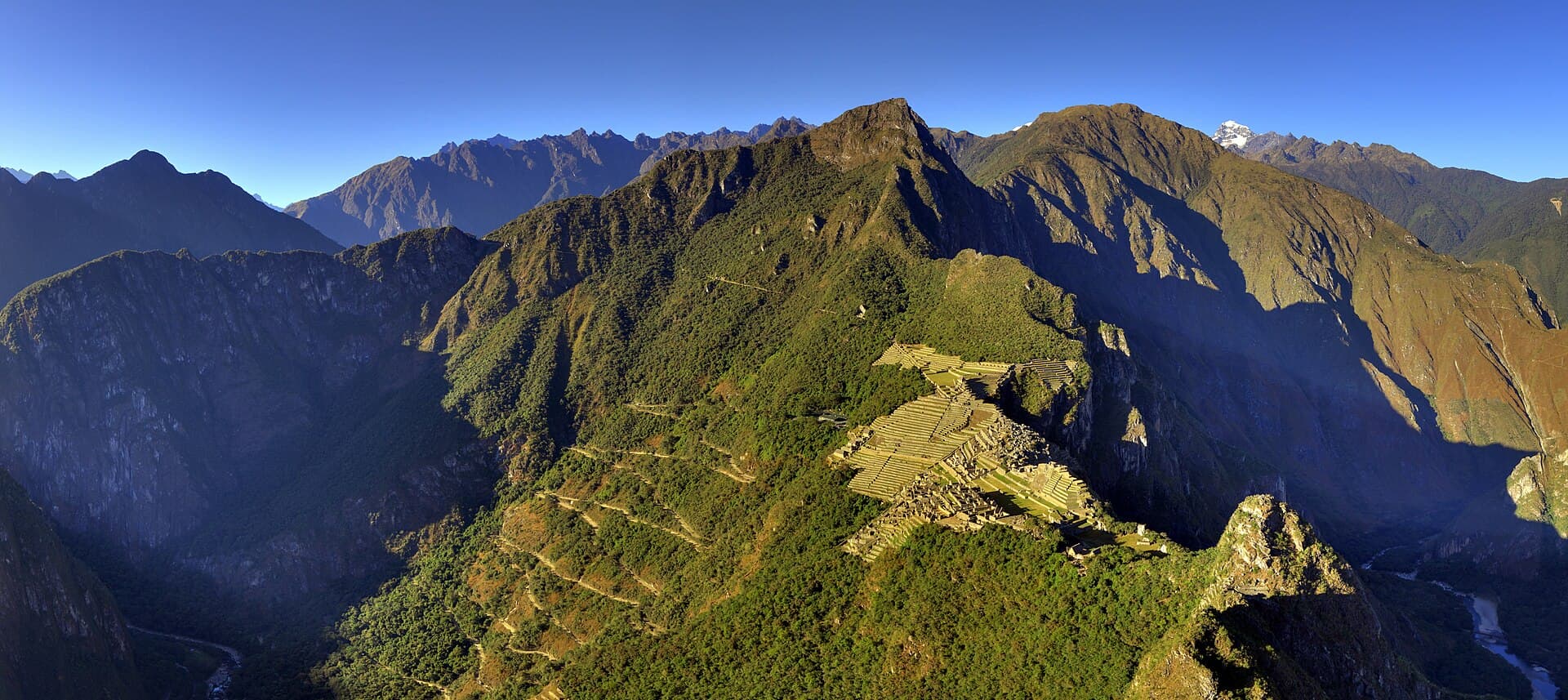
Photo: Martin St-Amant (S23678), CC BY-SA 3.0
You need about five days for Cusco and Machu Picchu together. Sleep your first three nights lower down, in Ollantaytambo and Aguas Calientes, see Machu Picchu on day three, and finish in Cusco, the highest stop, once your body has had time to adjust. Four days works if you go straight from Machu Picchu up to Cusco; three is the floor. The classic Inca Trail adds about four days.
Why the order matters as much as the number of days
Cusco is the highest place you'll sleep on this trip, so the standard advice is to land there and leave right away. The city sits at about 3,350 m (11,000 ft), and the CDC's travel-medicine guide notes that travelers flying into places like Cusco can sleep lower than the airport for a night or two before going back up. Ollantaytambo, 72 km away by road, is at 2,792 m, and Aguas Calientes and the citadel are lower still. The CDC also advises skipping alcohol and keeping exercise mild for the first 48 hours at altitude.
Traveler reports back this up. On the Rick Steves forum in May 2026, a poster who flew in and took a taxi straight to Ollantaytambo recommended doing exactly that, and a Lima-based poster said the altitude slowed everyone down. Another poster, who went in July 2025, got to just over 12,000 ft with no trouble at all. You won't know how you'll react until you land, which is why the plan below doesn't depend on feeling fine on day one.
One catch: not all of the Sacred Valley is low. Chinchero sits at 3,762 m, higher than Cusco, and the Moray terraces are at about the same height as the city. A Rick Steves forum poster suggested saving Chinchero for the trip back up from Ollantaytambo rather than seeing it on the way in, and the same logic applies to Moray.
A five-day plan, day by day
This plan climbs gradually: three nights low, then two in Cusco.
Day 1: Land in Cusco, sleep in Ollantaytambo. Go straight from the airport to Ollantaytambo; a Rick Steves forum poster says taxis are plentiful. Keep the afternoon gentle, with a stroll through the old town and an early night. For how the two towns compare as bases, see where to stay in our guide.
Day 2: Ollantaytambo's ruins, then the train down. See the main ruins in the morning at an easy pace, then take an afternoon train to Aguas Calientes. On PeruRail's May to December 2026 timetable the ride takes about an hour and a half; the 12:55 from Ollantaytambo arrives at 14:25. Sleeping at the foot of the mountain lets you take an early entry slot.
Day 3: Machu Picchu. Go up early, then catch an afternoon train back to Ollantaytambo or Urubamba for the night. PeruRail's 14:55 departure reaches Ollantaytambo at 16:31.
Day 4: Up to Cusco via the high sights. Hire a driver for the road up by way of Maras, Moray and Chinchero, which the July 2025 traveler covered in a single day, and sleep in Cusco with three nights lower down behind you.
Day 5: Cusco. Spend the morning in the historic center and at Qorikancha, and the afternoon at Sacsayhuamán above town. This day is also your cushion if the railway stalls on day 3. Fly out the next morning.
Three or four days: what to cut
Cut the high sights and Cusco time before you cut the low nights. With four days, skip day 4 and go up to Cusco on the evening of day 3; PeruRail's 16:43 from Machu Picchu reaches Cusco's San Pedro station at 21:23. With three, sleep two nights in Ollantaytambo, take an early train down on day 2 (PeruRail's 06:10 reaches Machu Picchu Pueblo at 07:40) and spend day 3 in Cusco.
What doesn't save time is a day trip from Cusco. PeruRail's direct train leaves Cusco's San Pedro station at 6:40 and arrives at 10:52, and the last trains back leave at 16:43 and 17:23, reaching Cusco after 21:00. That's under six hours in Aguas Calientes, including the 30-minute bus up and back down, in a day of about 15 hours, and you still sleep at Cusco's altitude. Some services start even earlier, with a 03:20 bus from Cusco's Wanchaq station to the train at Ollantaytambo. Our guide lists the day trip as one to skip, and the timetable shows why.
Adding the Inca Trail or Rainbow Mountain
Both add days, and both belong after you've acclimatized. The classic Inca Trail takes four days and ends at Machu Picchu, with the return to Cusco that evening. Its high point, Dead Woman's Pass, is about 4,200 m, some 850 m above Cusco. G Adventures asks trekkers to arrive at least a day early and suggests a couple; given the CDC's advice, two nights in the Sacred Valley and one in Cusco is the safer lead-in. With a spare day after the trek, that makes seven or eight days in all. Permits sell out months ahead, so check how they work in our Machu Picchu travel guide before you fix dates.
The one-day Inca Trail from kilometre 104 adds just one day: hike in the day before your Machu Picchu entry and sleep in Aguas Calientes, as in the guide's three-day plan. Save it until you've had two nights in the valley.
Rainbow Mountain (Vinicunca) tops 5,000 m and takes a full day from Cusco: about two hours' drive each way, then a walk of about 5 km at altitude. Add it as a sixth day at the end, after at least two nights in Cusco, not at the start.
Keep one day spare for the railway
A single spare day absorbs most of what goes wrong on the one line to Machu Picchu. Three incidents in the past ten months show the pattern, and each began in the afternoon, when visitors are heading back. A head-on collision on 30 December 2025 killed a train driver, injured about 40 people and left around 2,000 tourists stranded in Aguas Calientes until trains resumed the next day. A derailment on 24 January 2026 delayed 15 trains, and service resumed the next morning. On 2 October 2026, a collision near Pampacahua kept passengers waiting at the station for more than three hours.
Protests are the less predictable risk. The UK Foreign Office says trains to and from Machu Picchu are occasionally suspended because of protests, often with no word on when they'll reopen, and our guide's getting-around section covers the 2025 protests that stranded nearly 1,000 tourists. In the five-day plan, day 5 in Cusco is the cushion. However you shorten the trip, leave at least one full day between Machu Picchu and your flight out of Cusco.
Vous préparez Machu Picchu et le chemin de l’Inca, Pérou ?
Enregistrez le Machu Picchu dans un voyage gratuit et organisez ces cinq jours autour de votre date d'entrée.
Réponses rapides
Is Machu Picchu higher than Cusco?
No. The citadel is at about 2,430 m, roughly 900 m below Cusco, and even the summit of Machu Picchu Mountain, at about 3,050 m (10,000 ft), is lower than the city. That's why the ruins make a good early stop and Cusco a better finish.
Can you do Cusco and Machu Picchu in two days?
Only as a rush. You'd land, go straight to Ollantaytambo, take an early train to Machu Picchu on day 2 and fly out on day 3, seeing almost nothing of Cusco. There'd be no cushion if the railway stopped, as it did at least three times in the past year.
Does one Cusco tourist ticket cover the whole trip?
It covers most of the ruins in this plan, but not Machu Picchu. The integral Boleto Turístico del Cusco cost S/ 130 when checked in October 2026, is valid for 10 days and includes Sacsayhuamán, Pisac, Ollantaytambo, Chinchero and Moray among its sites. Machu Picchu has its own timed tickets, sold on tuboleto.cultura.pe.
How many days do you need in Cusco itself?
One full day covers the historic center, Qorikancha and Sacsayhuamán at an easy pace, which is what the five-day plan gives it, and a second day lets you slow down. Travelers on the Rick Steves forum who started in the valley spent two or three nights in Cusco at the end.
Quand partir, où dormir, quoi éviter : tout le reste est dans le guide de voyage de Machu Picchu et le chemin de l’Inca, Pérou.
Sources et méthode de cet article
I haven't been to Cusco or Machu Picchu yet. This article is built from traveler reports on the Rick Steves travel forum, Peruvian press coverage of the railway, PeruRail's published timetable, the Cusco tourist-ticket office, and CDC and UK government advice, all checked on 29 October 2026. Train times change often, so check PeruRail or Inca Rail before you book.
CDC Yellow Book 2026: High-altitude travel and altitude illness
PeruRail timetable, May to December 2026, PDF
PeruRail: train services from San Pedro and Poroy resume on 1 May 2026
COSITUC: Boleto Turístico del Cusco fares
UK Foreign Office: Peru safety and security
Rick Steves forum: Sacred Valley, how much can you realistically fit in? May 2026
Rick Steves forum: Peru partial itinerary, which is better? February 2025
Canal N: Ferrocarril Transandino autoriza reanudación de trenes a Machu Picchu, October 2026
Get the next trip guide
New destination guides and videos, roughly monthly. No spam, unsubscribe anytime.