Reiseführer
Phoenix, Arizona Reiseführer
Von meiner eigenen Reise
Maschinell aus dem Englischen übersetzt · Original ansehen
Auf einen Blick
- Best time
- November to April; February to April for wildflowers and spring training
- Days needed
- 2–3 in the Valley, plus a day or overnight for Sedona or the Grand Canyon
- Getting around
- Rent a car; light rail only covers the airport–downtown–Tempe–Mesa line
- Time zone
- Mountain Standard Time all year (Arizona skips daylight saving)
- Good for
- Sunrise hikes, winter sun, desert architecture, spring-training baseball
- Skip if
- You're coming June to September and want to be outdoors in the daytime
In diesem Reiseführer
Überblick
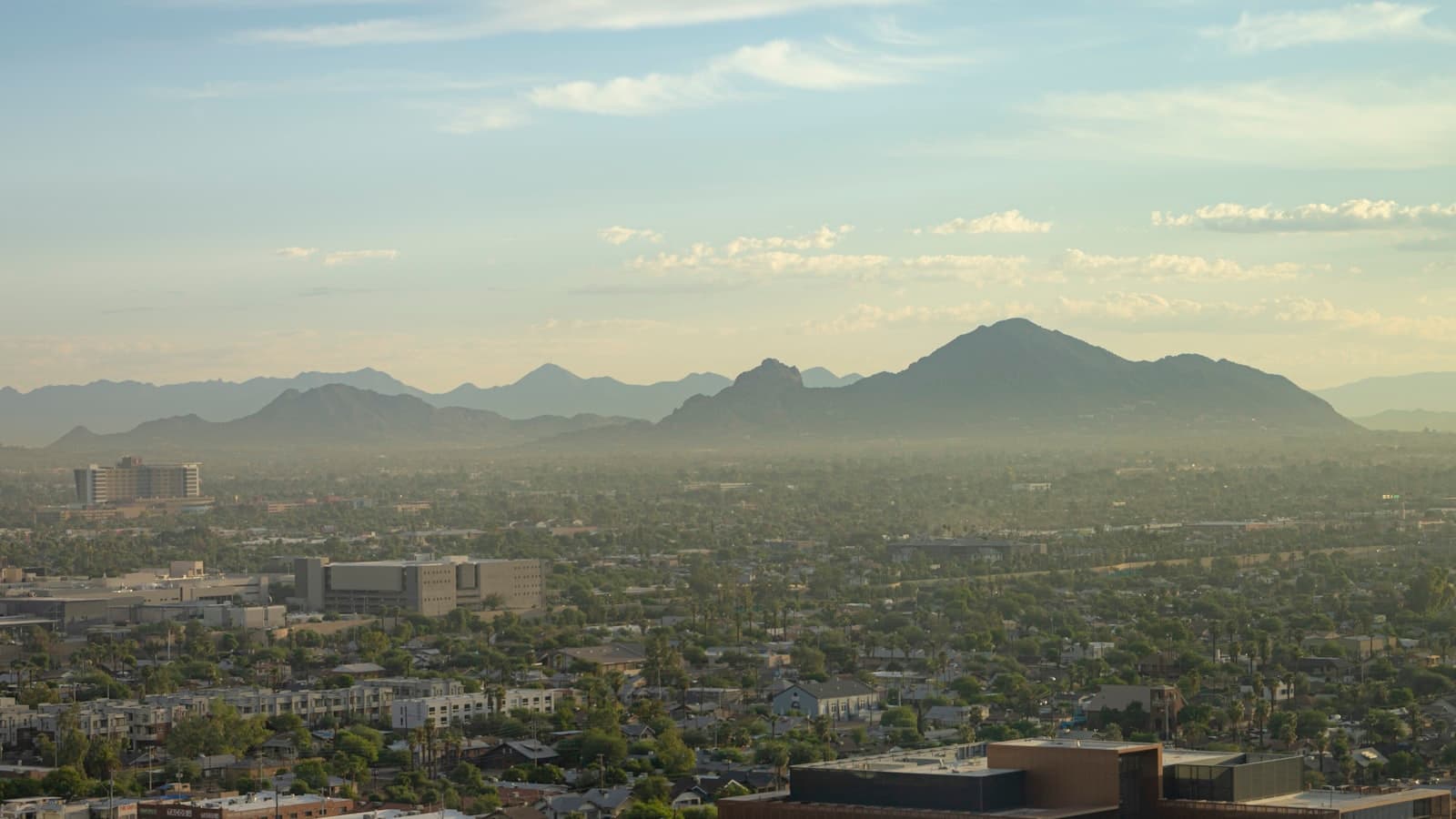
Phoenix is the middle of a low, sun-baked basin that locals call the Valley — the city itself plus Scottsdale, Tempe, Mesa, Chandler, Glendale and a dozen more that run together with no real border between them. It sits in the Sonoran Desert, the only place saguaro cactus grows wild, and it's ringed by small rugged mountains you can hike straight from a city street.
It is a car city. Distances are longer than the map makes them look, blocks are wide, and summer shade is scarce. But it's also an easy place to visit: flat, well-signed, endless parking, and a downtown-to-Tempe light rail line if you base yourself right. Come for the desert light, the hiking, the Mexican food, and quick access to Sedona and the Grand Canyon.
A note on this guide: I came through Phoenix in October 2023 and it turned into an accidental reunion tour more than a sightseeing trip. The desert, the light, and one very good taco stand stuck with me — the rest of what follows is researched, not lived.
Lieber auslassen – und stattdessen
Skip: Camelback's Echo Canyon at 10 a.m. on a hot day. Instead: go at sunrise, or do the Papago Buttes at sunset. The midday climb is where most of Phoenix's mountain rescues happen — and during an Extreme Heat Warning, the city now closes Echo Canyon, Cholla and the summit trails from 8 a.m. to 5 p.m., Monday to Thursday, so you may not be allowed up at all.
Skip: the Mystery Castle. Instead: or . It still shows up on "hidden gems" lists, but the Mystery Castle has been closed to visitors since 2022. It was bought by a new owner in April 2026 with plans to restore it, and no reopening date had been announced when this guide was checked.
Skip: Sedona and the Grand Canyon in one day. Instead: pick one, or stay overnight. The South Rim alone is three and a half to four hours each way. Stacking both turns a bucket-list day into eight hours of driving.
Skip: making your whole night out. Instead: a First Friday. Scottsdale's bar strip is fine, but downtown Phoenix's monthly art walk is where the city's own creative scene shows up.
Beste Reisezeit
November to April is the season. Daytime highs sit in the 60s–80s °F, nights are cool, and it barely rains. This is when the resorts fill up and prices climb.
February to April is the sweet spot: wildflowers bloom in the desert, and Cactus League spring-training baseball brings 15 MLB teams to ballparks across the Valley.
Late October to early December is a quieter shoulder — still warm, still dry, fewer crowds. This is when I visited; the days were hot but the evenings were genuinely cool.
June to September is the hard part. Highs run past 100 °F for weeks, often 110+. It is not just uncomfortable — every summer people are hospitalized or die on Phoenix trails that looked fine at 7 a.m. If you come in summer: hike at first light or not at all, carry far more water than you think you need, and plan the middle of the day around a pool or air conditioning. July to mid-September is also monsoon season — sudden afternoon thunderstorms, dust walls ("haboobs"), and flash flooding in desert washes.
Unterwegs vor Ort
Rent a car. Almost everything worth doing — trailheads, Scottsdale, day trips — assumes you can drive yourself, often before sunrise.
The Valley Metro light rail is genuinely useful if you stay in its corridor: it links Sky Harbor airport, downtown Phoenix, midtown, Tempe (and ASU), and Mesa. If your trip is museums, ballgames, and Tempe nightlife, you can do it car-light.
Everything else — , Arcadia and Camelback, north Phoenix, the far suburbs — needs a car or a rideshare budget, and cross-Valley rideshares add up fast.
Sky Harbor (PHX) is unusually close to downtown — about 10 minutes — with a free PHX Sky Train connecting the terminals to the light rail and the rental-car center.
Aktivitäten
The Valley's signature experience is hiking a desert mountain at sunrise, then spending the hot hours somewhere indoors or in the water. A rough priority order:
Camelback Mountain

The iconic Phoenix hike, right between Phoenix and Scottsdale. Two routes — Echo Canyon and Cholla — both climb roughly 1,200 feet in a little over a mile, with hand-over-hand scrambling near the top and a huge view over the Valley. It's strenuous, exposed, and extremely popular. Go at first light: the small lots fill before dawn on weekends, and the rock bakes by mid-morning. This is not a casual stroll.
Piestewa Peak
In the Phoenix Mountains Preserve, closer to central Phoenix. A steep, steady summit climb with city views — similar effort to Camelback but less scrambling and usually less of a scene.
Papago Park & Hole-in-the-Rock
Low red-sandstone buttes between Phoenix, Tempe and Scottsdale. is a short, easy walk up to a wind-carved opening that frames the sunset over the city — bring people, not gear. Papago also holds the Phoenix Zoo and the .
Desert Botanical Garden
A 140-acre living collection of desert plants from around the world, laid out along trails that actually teach you what you're looking at. Best in spring bloom; around the holidays the paths are lit after dark with thousands of luminaria bags (Las Noches de las Luminarias). Easy to pair with Hole-in-the-Rock.
South Mountain Park & Dobbins Lookout
One of the largest municipal parks in the country. A paved road climbs to , where the whole grid of the Valley spreads out below — an easy, no-hike sunset if you'd rather drive.
Old Town Scottsdale
The one district that works on foot and works without a plan. Old-Western storefronts, galleries, patios, and — the part I can vouch for from my own trip — string lights over the streets at night and a taco stand that was the best thing I ate all week. Good for an evening: park once, wander, eat.
Musical Instrument Museum (MIM)
In north Phoenix. Thousands of instruments from nearly every country, each with headphones that play automatically as you walk up to its case. Consistently rated one of the best museums in the city, and a perfect hot-afternoon option.
Heard Museum
Downtown. One of the finest collections of Native American art and history anywhere, with strong coverage of the Southwestern tribes whose land this is. Not large; half a day.
Roosevelt Row (RoRo)
The arts district just north of downtown — walkable blocks of murals, small galleries, breweries and coffee shops. Busiest on First Fridays, when the streets turn into a big art walk.
Taliesin West
Frank Lloyd Wright's winter home and studio in the north Scottsdale desert, now a UNESCO World Heritage Site. Guided tours only — book ahead.
Unterkünfte
Pick the area first; it decides how much you'll drive.
Old Town Scottsdale
The default for a first visit. Walkable to restaurants, bars, galleries and spas; close to Camelback; well connected to trails. Ranges from boutique hotels to big resorts. Liveliest at night.
Downtown / Midtown Phoenix
Best if you want museums, sports and events without a car — it's on the light rail, near the Heard, the ballparks and . More business-district than resort.
Tempe
Budget-friendly and central, anchored by ASU and Mill Avenue's bars and restaurants. On the light rail, minutes from the airport, close to Papago Park.
Arcadia
Leafy neighborhood under Camelback, between downtown and Scottsdale, with some of the Valley's best restaurants. Charming but light on hotels and you'll need a car.
North Scottsdale
Big desert resorts, golf, spas, and the closest base to the and . Spread out and car-dependent — a destination in itself rather than a base for exploring.
Essen & Trinken
Phoenix's food identity is Sonoran — the cooking of the Mexican state of Sonora, just across the border.

Sonoran hot dogs
The local icon: a hot dog wrapped in bacon, tucked into a soft bolillo roll, and piled with pinto beans, grilled and raw onions, tomato, mayo, mustard and salsa. Long-running spots include El Caprichoso, Nogales Hot Dogs, and Lupita's — often served from carts and small storefronts.
Sonoran-style Mexican
Flour tortillas, carne asada, cheese crisps. Barrio Café is the well-known name for modern Mexican; Cocina Madrigal in south Phoenix and Asadero Norte de Sonora are local favorites for the traditional version.
Fry bread
The Fry Bread House, a James Beard–recognized spot, serves Tohono O'odham fry bread — a puffy fried disc topped savory (beans, meat, green chile) or sweet.
Sweets and coffee
Sweet Republic for scratch ice cream. and are both dense with coffee shops, breweries and patio bars.
On my own trip I really only ate my way through Old Town Scottsdale — that taco stand is in my Phoenix story. Everything else here is where locals and food writers point.
Tagesausflüge
Phoenix is a strong base for northern and central Arizona.
Sedona (~2 hours north)

Red-rock canyons, famous trailheads (Devil's Bridge, Cathedral Rock), and a completely different landscape from the low desert. Doable as a long day; better overnight.
Grand Canyon South Rim (~3.5–4 hours)
A big day trip but possible if you leave before dawn. An overnight in Tusayan or at the rim is far less rushed.
Apache Trail & the Superstition Mountains (~1 hour east)
Saguaro desert, the jagged Superstitions, and reservoir lakes. The historic Apache Trail is partly unpaved and has had long closures from storm damage — check conditions first.
Tucson (~1.75 hours south)
Saguaro National Park, a UNESCO City of Gastronomy food scene, and Sonoran cooking at the source.
Häufige Fehler
Treating a morning hike like a stroll. Most trail rescues involve people who started late, carried one water bottle, and turned around too late. Rule of thumb from local rescuers: turn back when half your water is gone.
Not checking for trail closures. On Extreme Heat Warning days the busiest summit trails close during the day. Check the City of Phoenix parks site the night before.
Forgetting Arizona doesn't change the clock. From March to November, Phoenix is on the same time as Los Angeles, not Denver. It trips up flight times, tee times and tour pickups.
Underestimating a parked car. In summer, steering wheels, seat belt buckles and car seats get hot enough to burn. Use a windshield shade and crack the doors before getting in.
Driving into a flooded wash during monsoon season. It looks shallow; it often isn't. Arizona's "Stupid Motorist Law" can bill you for your own rescue.
Praktische Tipps
Heat is the real risk. From May to September, treat midday sun as dangerous. Hike at sunrise, carry two to three times the water you'd normally bring, wear a hat and sunscreen even in "just walking around" weather, and expect phone service to drop on many trails.
Monsoon season runs July to mid-September. It brings sudden storms, dust walls, and flash floods. Never drive into a flooded wash — under Arizona's "Stupid Motorist Law" you can be billed for your own rescue.
Spring training (late February to March) is a reason to visit on its own — but book tickets and hotels early, because it's the busiest and priciest window of the year.
It's dry. Drink more water than feels natural, use lip balm and lotion, and go easy on alcohol the first day, especially if you've flown in from sea level.
Tipping and taxes are standard US. Around 18 to 20 percent at restaurants, and sales tax is added at the register rather than shown on the shelf.
Respect the desert. Stay on trails, don't touch or move cactus, and give rattlesnakes a wide berth in warm months — they're around but not aggressive.
Pairing Phoenix with Flagstaff or the Grand Canyon means a 5,000 to 7,000 foot jump in elevation and much cooler air. Pack a warm layer even if Phoenix is in shorts weather.
Beispiel-Reisepläne
One day
Sunrise hike (Camelback if you're fit and it's cool, Piestewa or the Papago Buttes if not), breakfast in Arcadia, the late morning, the through the heat of the afternoon, then sunset at and dinner downtown.
Two days
Day one as above. Day two: Pueblo Grande first thing, the midday (it easily fills three hours), on the way to for a late-afternoon tour, and dinner in .
Three days
Add a pre-dawn drive to the to look for the wild horses, then either keep going up the Superstition side, or give the day to Sedona (two hours north) and come back after dinner.
Häufige Fragen
Do I need a car in Phoenix?
Almost certainly. The light rail is useful between the airport, downtown, Tempe and Mesa, but trailheads, Scottsdale and every day trip assume you can drive yourself — often before sunrise.
When is it too hot to visit Phoenix?
June through September. Highs run past 100 °F for weeks and often top 110 °F. You can still visit — resorts are cheap — but plan outdoor time for first light and spend the middle of the day indoors.
Can you do the Grand Canyon as a day trip from Phoenix?
You can, but it's three and a half to four hours each way to the South Rim. It works better as an overnight, or paired with Sedona and Flagstaff on the way.
Should I stay in Phoenix or Scottsdale?
Scottsdale if you want resorts, golf and a walkable bar district. Downtown Phoenix or Tempe if you want museums, ballgames and the light rail. The whole Valley is a 20-to-40-minute drive end to end outside rush hour.
What time zone is Phoenix in?
Mountain Standard Time all year. Arizona doesn't observe daylight saving time (the Navajo Nation in the northeast of the state does), so for most of the year Phoenix matches Los Angeles.
Bereit für Phoenix, Arizona?
Plane die Reise, füge sie einer Reise hinzu, die du gerade planst, oder speichere den Reiseführer für später.
Quellen und wie dieser Reiseführer entstand
This guide's core sections were written after my own trip in the late-fall shoulder season. The sections above — hidden gems, what to skip, common mistakes — were researched from local news, official sites and traveler reports, and the closures and ticketing details were checked on the date shown at the top.
Phoenix trails closed during Extreme Heat Warnings (AZFamily, Aug 2026)
Camelback Mountain summer rescues (Phoenix New Times)
Mystery Castle finds a new owner (National Trust for Historic Preservation)
Tovrea Castle tour ticket lottery (Axios Phoenix)
Where to see the Salt River wild horses (Visit Phoenix)
Reisen nach Phoenix, Arizona
Die persönlichen Geschichten hinter diesem Reiseführer.

Hast du eine Frage zur Planung dieser Reise? Stell sie in der Community.
Hol dir den nächsten Reiseführer
Neue Reiseführer und Videos, etwa einmal im Monat. Kein Spam, jederzeit abbestellbar.