Travel guide
Mérida and the Yucatán Cenotes, Mexico Travel Guide
Researched guide
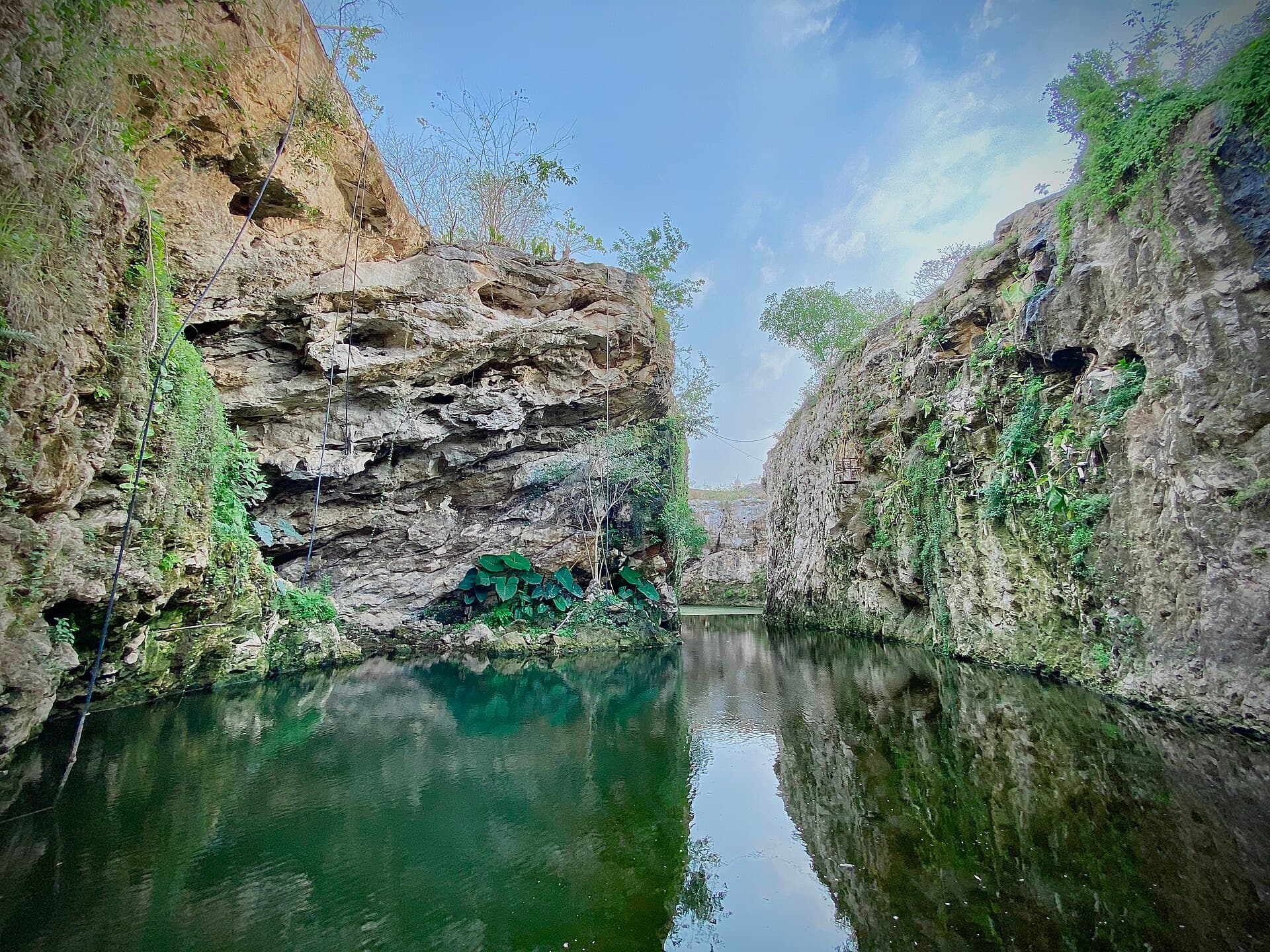
Photo: Sharon Hahn Darlin, CC BY 2.0
At a glance
- Best time
- The dry months from November; April and May bring 40°C-plus heat alerts
- Days needed
- 3 days in Mérida with 2 of them on cenote day trips
- Getting around
- A rental car for cenote-hopping; colectivo vans from downtown Mérida to Homún
- Good for
- Swimming in quiet cenotes, small Maya sites, slow colonial-city evenings
- Skip if
- You only want beach days; Mérida is an inland city
- Bring
- Pesos in small notes, water shoes, and no sunscreen on swim days
- Heads-up
- Mayapán ruins are closed, even where listings still say open
In this guide
Overview
Mérida is the capital of Yucatán state and the easiest base for swimming in the peninsula's cenotes, the freshwater sinkholes that dot the countryside. Dozens of them sit within about an hour of the city, many run by village families or community cooperatives rather than tour companies.
The catch travelers keep running into is that the famous ones are on every bus-tour itinerary. This guide focuses on cenotes and sites that local press, the state tourism board and independent travelers point to as quieter: family-run pools in Homún, the cooperative cenotes of San Antonio Mulix and Yokdzonot, and a mangrove-ringed Maya port on the north coast.
It suits independent travelers who can drive or don't mind local vans, families who want shallow, guarded swimming, and anyone who'd rather spend a morning with a cenote to themselves than shuffle through Ik Kil at noon. If you're heading on to the Caribbean side afterwards, see our Tulum guide.
Skip or swap
Skip: Mayapán, for now. Instead: Xcambó or the Abalá cenotes. Older articles call Mayapán the uncrowded (Mexico News Daily), but it has been closed by a land dispute with the local ejido since late 2023 or early 2024 (reports differ on the month). In March 2026 locals said visitors still arrive because official listings show it as open, only to find the gates shut (Diario de Yucatán). Check recent news before driving out.
Skip: Loltún and Balankanché caves. Instead: Kankirixché or Tza Ujun Kat for cave formations. Both caves have been closed since March 2020 after hurricane damage, and as of June 2026 no reopening date had been set (Por Esto).
Skip: between 11 am and 2 pm. Instead: . Ik Kil, beside Chichén Itzá, is the cenote on most bus-tour itineraries, and one guide warns that groups from Cancún arrive in waves of 50 to 100 between 11 am and 2 pm (Mexico Travel & Leisure). Yokdzonot is a short drive west.
Skip: Cuzamá's rail-cart cenotes on long weekends. Instead: go on a weekday morning. The horse-drawn "truck" ride is a classic, but on the first long weekend of 2023 one operator reported 25% above normal occupancy (Por Esto).
Skip: Chichén Itzá on Sundays. Instead: a weekday at the 8 am opening. Sundays are free for Mexican nationals and much busier, and tour groups arrive later in the morning (Matador Network).
When to go
Go in the drier, cooler months from November, and avoid April and May if you can. On 10 May 2026, Mexico's water commission warned of 40 to 42°C highs in Mérida, Homún and Chocholá, with heat indexes above 48°C, and advised staying out of the sun from 11 am to 4 pm (Por Esto).
Time of day. Cave and semi-open cenotes look best from about 11 am to 2 pm, when sunlight beams straight in. That clashes with tour-bus hours at the famous ones, so save the midday slot for quieter cenotes like Kankirixché, and do the busier ones at opening.
Weekends and holidays. Locals head to the cenotes on weekends and long "puente" holidays too. For the quietest swims, go on a weekday.
Getting around
A rental car is the easiest way to visit two or three cenotes in a day. The towns are 50 minutes to 1.5 hours from Mérida on paved roads, and the last stretch is sometimes dirt.
Colectivos. Shared vans to Homún leave from Calle 52 between Calles 65 and 67 in downtown Mérida, run from about 5:30 am and take roughly an hour (Por Esto). Yucatán Today lists the downtown stops for other towns, including Progreso, Muna and Valladolid. Fares are cash, and most vans have no air conditioning (Yucatán Today).
Mototaxis in Homún. Local mototaxi guides wait in the town center and take up to four people on a loop of three or four cenotes. Recent guides quote about 250 to 350 pesos for the ride, with entry fees on top (Let's Travel to Mexico).
Tren Maya. Mérida's station is in Teya, about 12 to 15 km east of the historic center. A taxi from downtown costs about 180 to 250 pesos, or the IE-Tram electric bus charges visitors 45 pesos (Por Esto).
Where to stay
Stay in or near Mérida's Centro and do the cenotes as day trips. Travelers who have lived in the city describe the Centro as safe and close to everything, but warn about traffic, fumes and few trees. and are quieter neighborhoods within walking distance of the main square, and Paseo de Montejo has shady, wide sidewalks (Half Half Travel).
To wake up next to a cenote. San Antonio Mulix's cooperative rents cabins and camping gear, Yokdzonot has campsites, and there is glamping just outside Homún (México Desconocido). Staying over is the surest way to swim before day-trippers arrive.
Common mistakes
Wearing sunscreen or repellent into the water. Cenote operators ask you not to wear sunscreen, insect repellent or body creams before swimming, to protect the water (México Desconocido). Cover up with a hat and long sleeves instead. Some cenotes, like Yokdzonot, also require a shower before you get in.
Refusing the life jacket. Most cenotes hand out life jackets, and some, including Yokdzonot, require them. Local press points out that many cenotes are 10 m or more deep (Por Esto).
Bringing only cards. Small cenotes, colectivos and mototaxis are cash only. Carry pesos in small notes.
Trusting old lists. Mayapán, Loltún and Balankanché all still appear in older "best of" articles but are closed. Check recent local news before a long drive.
Wearing flip-flops. Cenote staircases are often wet stone or metal. Water shoes help on the stairs and on slippery rock ledges.
Doing ruins at midday in spring. Heat is a recurring complaint about Yucatán day trips. Start at opening time and save the cenote for the hottest part of the day.
Sample itineraries
One day
Take an early colectivo or drive to Homún. Swim at Tza Ujun Kat when it opens at 9 am, then hire a mototaxi for two or three more family-run cenotes. Have lunch in town, then head back to Mérida for an evening around the main square.
Two days
Day one as above. On day two, drive southwest to the San Antonio Mulix cenotes, X'batún and , for a morning swim. Continue to Kankirixché near Mucuyché for its midday light, then return to Mérida. Or stop at in Chocholá for an evening swim.
Three days
Add an early start toward . Be at the ruins for the 8 am opening, then swim at instead of Ik Kil and eat at the cooperative's restaurant. If you'd rather see the coast, spend day three at Xcambó in the morning and the beach at Telchac Puerto or Progreso in the afternoon.
FAQ
Can I visit cenotes near Mérida without a tour?
Yes. Colectivo vans run from downtown Mérida to Homún, where mototaxi guides take you around the cenotes. A rental car makes it easy to combine Homún, Cuzamá, San Antonio Mulix and Kankirixché on your own schedule.
Is Mayapán open?
No. Local news reported it closed in March and June 2026 because of a land dispute, even though some official listings still show it as open. Check recent news before going.
Which cenotes near Mérida are least crowded?
Travelers and local press point to the smaller family and cooperative cenotes: X'batún and in San Antonio Mulix, Kankirixché near Mucuyché, and the smaller Homún cenotes on a weekday. Near , Yokdzonot is the usual alternative to Ik Kil.
Do I have to wear a life jacket in a cenote?
At most organized cenotes, yes, and they're usually included in the entry fee. Some, like Yokdzonot, make them compulsory even for strong swimmers.
How much cash should I bring for a cenote day?
Entry to smaller cenotes is typically 50 to 100 pesos per person, and a Homún mototaxi loop is a few hundred pesos per vehicle. Bring more for organized parks like Santa Bárbara, plus food and colectivo fares.
Ready for Mérida and the Yucatán Cenotes, Mexico?
Plan the trip, add it to one you're building, or save this guide for later.
Sources and how this guide was made
I haven't been to Mérida or the Yucatán cenotes yet. This guide is built from 48 sources (out of 86 considered), including traveler reports and travel blogs, the Yucatán state tourism board, INAH's site listings, and local newspapers Diario de Yucatán and Por Esto, cross-checked on 2 October 2026. Prices change often, so treat them as a guide and check before you go.
Yucatán Travel: San Antonio Mulix cenotes
Yucatán Travel: Cenote Kankirixché
Yucatán Travel: Cenote Tza Ujun Kat
Yucatán Travel: Cenote San Ignacio
INAH: Xcambó archaeological zone
Diario de Yucatán: cenotes near Mérida for the September 2025 holiday
Diario de Yucatán: five cenotes near Mérida (2022, updated 2024)
Diario de Yucatán: Mayapán still closed (March 2026)
Por Esto: Mayapán, Loltún and Balankanché closures (June 2026)
Por Esto: getting to Homún by colectivo (March 2026)
Por Esto: Xcambó among the mangroves (September 2026)
Por Esto: Conagua heat alert for Mérida (May 2026)
Por Esto: getting to the Tren Maya station in Teya (July 2026)
Posta: five cenotes for under 100 pesos (February 2025)
Riviera Maya News: lesser-known cenotes in Yucatán (June 2025)
Yucatán Today: riding a colectivo in Mérida
México Desconocido: the cenotes of Homún
Let's Travel to Mexico: Homún cenotes
Hippie in Heels: Santa Bárbara cenotes
Uprooted Traveler: Cenote Yokdzonot
Half Half Travel: where to stay in Mérida
Matador Network: things to know before visiting Chichén Itzá
Have a question about planning this trip? Ask it in the community.
Get the next trip guide
New destination guides and videos, roughly monthly. No spam, unsubscribe anytime.