Pregunta de viaje
Playas de Aruba: dónde nadar, hacer snorkel o simplemente admirar el paisaje
Investigado a partir de reseñas de viajeros
Traducido automáticamente del inglés · Ver original
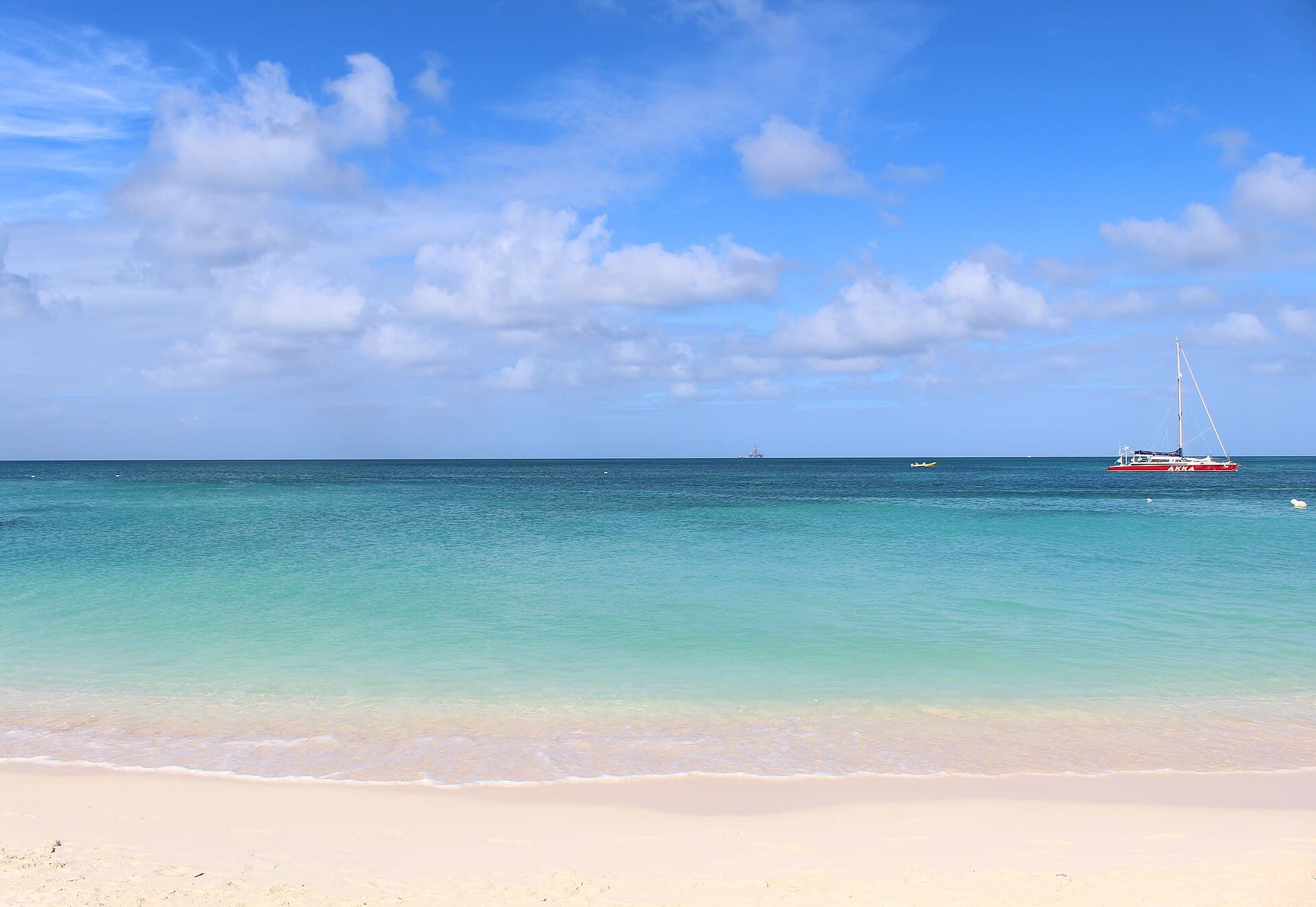
Photo: Coolcaesar, CC BY 4.0
¿Vas a Aruba? Recibe un plan día a día en un minuto o dos. Gratis, sin cuenta para verlo.
Planear mi viaje a ArubaSwim on Aruba's west and south coasts and treat the north coast as scenery. Eagle Beach is the best all-rounder for space and shade, Palm Beach has the bars and watersports, Arashi and Boca Catalina are the easy snorkeling beaches, and Baby Beach's shallow lagoon suits small children. Two things catch visitors out: Aruba has no lifeguard service, and topless sunbathing isn't allowed on public beaches.
Swim on the calm side, look at the wild side
Aruba's calm water is on the sheltered west and south coasts, while the north and east coasts take the trade winds and the surf head-on.
The calm side. From Eagle Beach north through Palm Beach and Hadicurari to Arashi and Boca Catalina, and at Mangel Halto and Baby Beach on the south coast, the water is usually calm and clear enough to swim and snorkel straight from the sand.
The wild side. The north coast is for looking. At Boca Prins a sign strongly advises visitors not to enter the water because of strong undertows that are always present. Dos Playa has "a rough ocean with a strong undertow" and isn't suited to inexperienced swimmers or bodyboarders, and at Andicuri, where local bodyboarding contests are held, only experienced swimmers should go in, watching for currents. Travel writers found Boca Keto and Blackstone Beach too rough to swim at all. Dos Playa and Andicuri have no food, drinks or facilities, Andicuri's dirt road needs at least an SUV and preferably a 4x4, and Boca Prins and Dos Playa sit inside Arikok National Park, so you'll need the park pass (where to buy it is in the guide's getting-around section). On the south coast, Boca Grandi near Baby Beach is the exception: a kitesurfing beach with a strong current, covered in the hidden gems of our Aruba guide.
The right beach for the day you want
Eagle Beach works for most days, but snorkelers, families with toddlers and anyone after a quieter, more local beach have better options.
Room and shade: Eagle Beach. It's the island's widest beach, voted the Caribbean's third-best in Tripadvisor's 2026 Travelers' Choice awards, the tourism board notes, and shade huts (palapas) line the sand. Caribbean Journal wrote in August 2026 that even on busy days you can usually find a quiet patch, a palapa and plenty of room, though Earth Trekkers still advises getting there early to claim one. The guide's FAQ compares it with Palm Beach as a base.
Activity and bars: Palm Beach. Calm water, watersports concessions, piers and the high-rise hotels' bars and restaurants make this the liveliest stretch, and travel writers call it one of the busiest, most crowded beaches on the island.
Snorkeling from the sand: Arashi and Boca Catalina. Arashi, the last stop on the L10A bus that runs along the hotel strip from Oranjestad about every 20 minutes in the daytime, has calm, shallow water, a beach bar, free shade huts, and chairs and umbrellas for rent. The best snorkeling is on the left as you face the sea; the tourism board suggests water shoes for the rocky sections and arriving early for a hut and an easy parking spot. Boca Catalina, five minutes' drive from the Palm Beach high-rises, is reached by steps from a roadside parking area; it's quiet on weekdays and draws local families at weekends. At neighboring Catalina Cove, a snorkeling blogger who spent a week on the island warns that boats drop off snorkel-tour groups and parking is limited, so go early. Tres Trapi, near Malmok, is where travelers report turtles in the morning (see the guide's hidden gems).
Shallow water for small children: Baby Beach or Hadicurari. Baby Beach is a half-moon lagoon so shallow you can wade a long way out and still touch the bottom, with free shade huts, rentals of beach beds, windscreens and snorkel gear, a refreshment stand, a grill and public toilets. It's about a 45-minute drive from the Palm Beach hotels, or a bus to San Nicolas (the L2 or L3A) and then the L900, which runs about once an hour. Not everyone thinks the trip is worth it: the Earth Trekkers writers found some trash on the sand and a view of the oil refinery. Closer to the hotels, Hadicurari (Fisherman's Huts) has very shallow, calm water and is a favorite of local families with children. It's also where people learn to windsurf and kitesurf, and it hosts the Aruba Hi-Winds windsurfing event each June or July, so expect sails and kites offshore.
Confident snorkelers: Mangel Halto. This south-coast beach near Savaneta has calm, shallow water among mangroves, a wooden sun deck, public shade huts and a reef that drops to about 110 feet. The best snorkeling is at the cuts and along the reef's outer edge, which is exactly where the currents are (see the next section), and you'll realistically need a car to get there.
Nobody is watching the water
Swim as if no one is keeping watch: Aruba has had no lifeguard service since the Red Cross ended its rescue service in the early 1980s, Dutch public broadcaster NTR reported in April 2026.
Four tourists drowned in the sea at separate spots around the island in January 2026. A Red Cross lifeguard instructor has proposed stations at Arashi, Eagle Beach, Spaans Lagoen and Baby Beach, and a member of parliament has pressed the tourism minister on sea safety, but no service was running when NTR reported.
Baby Beach's opening. The lagoon is calm, but where the bay opens to the ocean, the tourism board asks snorkelers to stay inside the marked snorkel area. A snorkeling guide reports a strong current running along the breakwater toward the bay's entrance, advises avoiding the larger opening on the right, and notes that kiteboarders use the bay too.
Mangel Halto's outer reef. The cuts and the outer edge are exposed to the open ocean. Snorkeling Report says to go only when there's no wind or surf and very little current, to head back to the beach if the current gets strong, not to go alone, and to keep clear of the cut with a buoy in it, which small boats use.
Your bag on the sand. The UK Foreign Office advises against taking valuables or cash to the beach and against leaving bags in your car.
Rules to know before you spread your towel
Every beach is public, but hotel setups, swimwear, cars and fires on the sand all come with rules.
Public, with limits. "No beach in Aruba will ever be owned by a hotel," tourism minister Wendrick Cicilia said in February 2026, as the government began rewriting its beach policy. Under temporary guidelines the tourism board published in April, though, a palapa or lounger a hotel has set up and assigned counts as taken even while its guest is swimming, and some sections are hotel leasehold reserved for guests; the guide's common mistakes explains how to find a free hut.
Keep your top on. Aruba's visitor code of conduct states that nudity and topless sunbathing are not allowed.
No cars, no fires. The same code bans driving or parking on beaches and dunes and lighting barbecues or fires on them, and asks visitors not to feed fish or turtles, not to pick up starfish for photos and to use coral-friendly sunscreen.
For hotels, food and getting around, see our Aruba travel guide. Traveling from Germany? Aruba From Germany covers flights via Amsterdam, passports, dollars and plugs. And if small coves appeal more than long beaches, see how Curaçao differs from Aruba.
¿Planeas Aruba?
Empieza un viaje gratis a Aruba con Eagle Beach, Tres Trapi, Mangel Halto y Baby Beach ya incluidas, y luego asígnale a cada día su playa.
Respuestas rápidas
Can you go topless on Aruba's beaches?
Not on public beaches: Aruba's official code of conduct says nudity and topless sunbathing are not allowed. Visit Aruba's FAQ says it's accepted only on two private beaches, Renaissance Island and De Palm Island, and in separate areas at a few resorts with many European guests, such as Manchebo and Bucuti & Tara, where you still can't walk the beach topless. Ask your hotel before assuming.
Do any Aruba beaches charge an entry fee?
Most don't. The beaches are public and the shade huts are free, though chairs and umbrellas from vendors cost extra. Dos Playa and Boca Prins are inside Arikok National Park, which requires a conservation pass, and Renaissance Island and De Palm Island are private beaches with their own access rules.
When do sea turtles nest and hatch on Eagle Beach?
Nesting season runs from March to September and hatching from May to November, according to Aruba's tourism authority, and most of the island's nests are on Eagle Beach. Keep lights and camera flash off on the sand at night, watch nesting turtles from a distance, leave hatchlings alone, and call Turtugaruba on +297 592 9393 if you find a nest hatching.
Are Aruba's beaches busy at Easter?
Yes. Local families traditionally camp on Eagle Beach during Easter week, with permits from the police, and in 2024 the camping season ran from 24 March to 7 April. Easter falls on 28 March in 2027, so expect crowded sand around then, although the rules say beach huts must stay free for beachgoers.
Planificador de viajes
Planea tu viaje a Aruba
Dime tus fechas y lo que te gusta, y recibe un plan día a día hecho con mis guías. Gratis, sin cuenta para verlo.
Cuándo ir, dónde alojarse, qué evitar: todo lo demás está en la guía de viaje de Aruba.
Más sobre Aruba
Fuentes y cómo se hizo este artículo
I haven't been to Aruba yet. This article is built from the Aruba Tourism Authority's beach pages and rules, Government of Aruba notices, the Arubus timetable, Dutch public broadcaster NTR's reporting on sea safety, UK travel advice, and reports from snorkelers and travel writers, checked on 16 November 2026.
Aruba Tourism Authority: Aruba beach guidelines 2026
Aruba Tourism Authority: Aruba code of conduct
Government of Aruba: Modernization of the beach policy (February 2026)
Aruba Tourism Authority: Eagle Beach
Aruba Tourism Authority: Palm Beach
Aruba Tourism Authority: Arashi Beach
Aruba Tourism Authority: Boca Catalina
Aruba Tourism Authority: Hadicurari Beach
Aruba Tourism Authority: Baby Beach
Aruba Tourism Authority: Mangel Halto
Aruba Tourism Authority: Boca Prins
Aruba Tourism Authority: Dos Playa
Aruba Tourism Authority: Andicuri Beach
Aruba Tourism Authority: How to protect our sea turtles during your vacation
Government of Aruba: Camping season 2024
Visit Aruba: Are there topless beaches in Aruba?
UK FCDO: Aruba travel advice, safety and security
Caribbean Journal: 8 beaches to visit in Aruba (August 2026)
Earth Trekkers: Our top ten beaches in Aruba (updated February 2026)
Enriching Pursuits: Boca Catalina snorkeling guide (March 2025)
Recibe la próxima guía de viaje
Nuevas guías de destinos y videos, más o menos una vez al mes. Sin spam, cancela cuando quieras.