Guía de viaje
Ciudad de México, México Guía de viaje
Guía investigada
Traducido automáticamente del inglés · Ver original
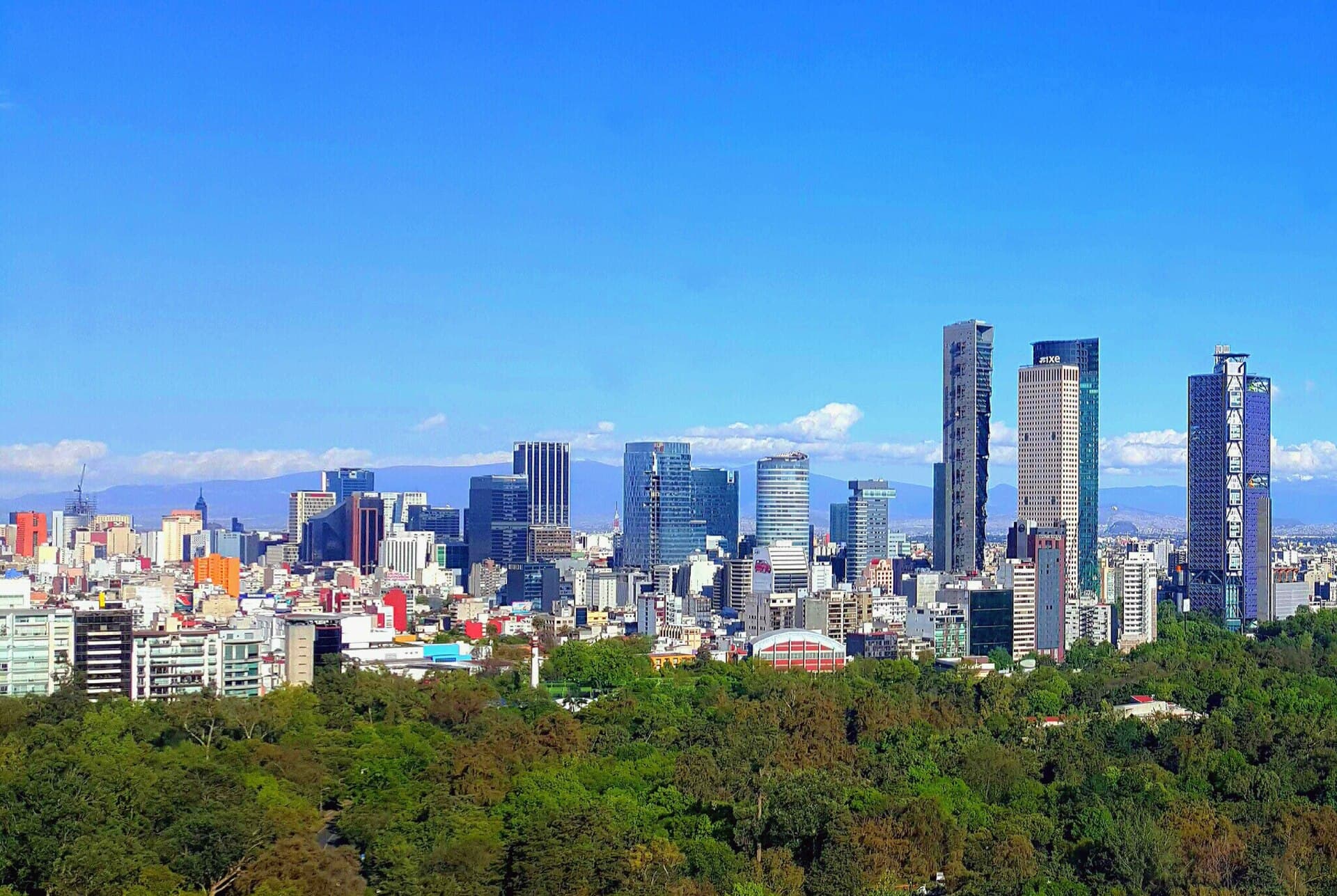
Photo: Jonathan Salvador, CC BY-SA 4.0
De un vistazo
- Best time
- November to April, the dry season; May to October is the wet season
- Days needed
- 3 to 4 in the city, plus a day for Teotihuacán
- Getting around
- walk within a neighborhood, Metro (5 pesos) by day, app ride or authorized taxi at night
- Altitude
- about 2,240 m (7,350 ft), so take the first day slowly
- Water
- drink bottled or garrafón water, as many residents do
- Good for
- food lovers, museum days, architecture and late nights out
- Skip if
- you want beach weather, or big-city crowds and traffic wear you down
En esta guía
Panorama general
Mexico City is one of the world's great food and museum cities, and it rewards travelers who plan by neighborhood. It's enormous (crossing it can take more than an hour in traffic), it sits about 2,240 meters up, and many of its best moments, from a 1948 breakfast fonda to a 1937 dance hall, happen well away from the famous sights.
This is a researched base guide for a first visit: which neighborhood to stay in, how to use the Metro and app rides safely, what changed at in 2026, and eight places that local media, food writers and travelers keep recommending but that the usual top-10 lists leave out. It suits food-first travelers, museum lovers and night owls who don't mind big-city noise.
If you're continuing south, our Oaxaca guide covers the markets, and our Mérida and Tulum guides cover the Yucatán.
Qué evitar y qué hacer en su lugar
Skip: planning around a pyramid climb. Instead: be at the 8am opening and walk the Avenue of the Dead. On April 20, 2026, a gunman opened fire at the Pyramid of the Moon, killing a Canadian visitor. The site reopened two days later under reinforced security, with the Moon pyramid closed to climbers until further notice; the Pyramid of the Sun was already off-limits. N+ reported that backpacks, suitcases, speakers, umbrellas, alcohol and drones aren't allowed in, so travel light.
Skip: turning up at without a ticket. Instead: book on the museum's official ticket site, or spend that slot at the . Smithsonian describes ticket lines at Frida Kahlo's house that often stretch around the block. The museum sells tickets through boletos.museofridakahlo.org.mx and a kiosk at its shop at Londres 234, and it's closed on Mondays.
Skip: the "discount" touts on the way to 's docks. Instead: buy at the official ticket booth at Cuemanco or Nativitas. People on motorbikes and bicycles flag down visitors with offers before they reach the boats. A trajinera costs about 750 pesos an hour for the whole boat, not per person (June 2026), so agree on the total and the length of the ride before you board.
Skip: hailing a taxi on the street, or accepting a ride from someone at airport arrivals. Instead: an app ride, or an authorized taxi from the booths inside the terminal. Safety guides link express kidnappings, where a driver forces passengers to withdraw cash at ATMs, to unofficial taxis. They're rare but serious.
Skip: pulquerías from old lists. Instead: Las Duelistas, after checking it's open. La Risa, open since 1903, has closed, and in early 2025 city inspections shut at least 12 traditional pulquerías.
Skip: trying to walk into . Instead: or . Pujol's reservations open about a year ahead and fill quickly. The city's most talked-about taco counters take no bookings at all.
Mejor época para visitar Ciudad de México
November to April is the easiest time to visit: it's the dry season, with cool mornings and mild days. May to October is the wet season, and July and August are the wettest months.
Temperatures. The altitude keeps the city mild all year. April is the warmest month, with average highs around 27.5 °C (81.5 °F). December and January are the coolest, with average lows around 8.5 °C (47 °F), so pack a warm layer for the evenings.
Wet season. Plan indoor backups such as museums, markets and cantinas, and carry a light rain jacket.
Día de Muertos. Late October and early November bring the city's biggest celebration, including a giant ofrenda in the Zócalo. Book rooms early if you're coming then.
Cómo moverse por Ciudad de México
Walk within a neighborhood, ride the Metro or Metrobús by day, and use an app ride or an authorized taxi at night and from the airport.
Metro and Metrobús. The Metro costs 5 pesos a ride, with free transfers between its 12 lines, and the Metrobús costs 6 pesos (fares as of June 2026). Pay with a rechargeable Movilidad Integrada (MI) card, which cost 15 pesos in June 2026; it also works on the Tren Ligero, Cablebús, trolleybuses, RTP buses and Ecobici bikes. Most microbuses still take cash. Avoid packed cars at weekday rush hours, when pickpocketing is most common, and keep your phone in a front pocket. Women can ride in the women-only cars, which are enforced at rush hour.
From the airport. The simplest options are an authorized taxi, bought at the Transportación Terrestre booths inside the terminal for a fixed price by zone, or Metrobús Line 4 for 30 pesos if you're traveling light. Uber does pick up at the airport, but as of May 2026 it still lacked formal federal authorization there, and the National Guard was running periodic operations against app drivers in the pickup zones.
App rides in town. App rides such as Uber are the standard way to get around at night, and you see the fare before you book. Plan your days by neighborhood, because crossing the city can take more than an hour in traffic.
To the sights. For , take Metro Line 5 to Terminal Central de Autobuses del Norte and an Autobuses México–San Juan Teotihuacán bus from Sala 8; the ride takes about an hour. For , the Tren Ligero runs from Tasqueña. For the , take Metro Line 3 to Universidad and then the campus Pumabús.
Qué hacer en Ciudad de México
The headline sights deserve their fame; the trick is timing and tickets.
. The excavated main temple of the Aztec capital, Tenochtitlan, beside the Zócalo. Its museum displays the Coyolxauhqui stone disc.
. In Chapultepec, holding the world's largest collection of pre-Columbian objects in a modernist building. It easily fills half a day.
(Museo Frida Kahlo). Kahlo's birthplace and home in . Buy tickets on the museum's official site, and note that it's closed on Mondays. On Thursdays it stays open until 9pm.
Dónde alojarse en Ciudad de México
For a first trip, stay in or : they're leafy, walkable and full of places to eat, and safety guides rate them among the safest areas for visitors. is the central alternative, Centro puts you next to the historic sights, and suits a slower, longer stay.
Roma Norte. The pick for food lovers, with tree-lined streets like Calle Durango packed with restaurants, bars and cafés. It's near Chapultepec, and the Metro's pink Line 1 stops at Sevilla, Insurgentes and Chapultepec.
Condesa. Art deco apartment blocks around Parque México and Parque España, with cafés and cocktail bars. It's one of the most sought-after areas to stay.
Juárez. Central and well connected, with plenty of hotels, and you can walk to Centro, Roma Norte and Chapultepec. It's heavily gentrified, and safety guides rate it safe by day but say to stay alert at night.
. Sleep next to the Zócalo, the and the cantinas. It's loud and busy by day; once the crowds thin out late at night, take an app ride rather than walk empty streets.
Coyoacán. A small-town feel, with colonial streets, cafés, Jardín Hidalgo, and Anahuacalli nearby. The catch is distance: it's far from Centro and Roma.
Polanco. Upscale, polished and next to the Chapultepec museums, and safety guides rate it among the safest areas. It's also expensive, and it feels less like the rest of the city.
A note on short-term rentals. Rising rents are a sore point. In July 2025, a march through Roma and Condesa against gentrification and short-term rentals ended with more than a dozen businesses vandalized, which President Claudia Sheinbaum condemned as xenophobic. If you rent an apartment, be a considerate neighbor.
Dónde comer y beber en Ciudad de México
Mexico City eats best at the counter. Most of the meals travelers rave about are tacos, market stalls and breakfast fondas that cost a few dollars and take no reservations. You only need to book ahead for a few famous dining rooms like and . The taco counters cluster in Centro, Roma and , with a few worth crossing town for, and two of the best-known cocktail bars sit on Avenida Álvaro Obregón in .
. A standing-room counter on Avenida Ribera de San Cosme in San Rafael that in 2024 became the first taquería to earn a Michelin star. It lost the star in May 2026, but the gaonera, its signature beef taco named after the bullfighter Rodolfo Gaona, still draws a line. Pay first, then wait to be called.
. A tiny stand on Calle Bolívar in Centro that's open nearly around the clock, listed with a Michelin Bib Gourmand in 2024. Order suadero, lengua or longaniza.
. A breakfast-only fonda in Tlacoquemécatl del Valle, founded in 1948, that cooks in clay pots from 6:30am Tuesday to Sunday until the food runs out, usually around noon. The signature is huevos con frijoles, and the stews rotate by day (pancita on Saturdays). A typical breakfast runs about 150 pesos.
. One of the city's oldest carnitas taquerías, on Calle Tolstoi in Anzures, just north of Chapultepec. Get carnitas, campechano or cecina tacos, or a bowl of mole de olla. It's big, so a table usually opens up within minutes.
. The original, on Calle de la Palma in Centro, is a classic breakfast hall for conchas with cream, hot chocolate and eggs with escamoles. There's always a line.
Contramar. A lunchtime seafood institution on Calle Durango in Roma Norte, known for its tuna tostadas and whole fish in red and green sauce. It closes in the early evening (6:30pm most days, 8:30pm on Fridays and Saturdays), and the wait without a reservation is long, so book.
Pujol. The splurge, in Polanco, and one of only two restaurants in Mexico to have earned two Michelin stars. Book the taco omakase at the bar or the tasting menu with its mole madre as soon as reservations open, which can be a year ahead.
and . The market breakfast in Roma Sur and the late-night al pastor in Narvarte are both in the hidden gems above.
. A small, mostly standing-room mezcal bar on Álvaro Obregón in Roma Norte, pouring agave spirits from small producers with a focus on women distillers. It was No. 5 on North America's 50 Best Bars 2026.
. A two-floor cocktail bar, also on Álvaro Obregón, that has been on the World's 50 Best Bars list since 2014. Cocktails average about US$11.
. A hidden, 1920s-style bar in 's Zona Rosa, named the World's Best Bar in 2024 and the Best Bar in North America in 2026. Book ahead, because walk-in waits are long, and keep your group to three or fewer.
. An ornate cantina on Avenida 5 de Mayo in Centro that opened in 1876 as a French pastry shop. Order the caracoles al chipotle or sopa de tortilla, and come at night, when it's liveliest.
and . For pulque in the afternoon and live dance bands on Tuesday and Sunday nights, see the hidden gems above.
Excursiones desde Ciudad de México
(about 45 km northeast, about an hour each way). The site is open daily from 8am to 5pm, with last entry at 4:30pm. Admission is 210 pesos for foreign visitors; the free Sunday entry applies only to Mexican citizens and residents. Climbing is closed (see Skip or swap), but the Avenue of the Dead and the two site museums, the Museo de Murales Teotihuacanos Beatriz de la Fuente and the Museo de la Cultura Teotihuacana, are open on the same hours. Arrive at opening, before the tour buses, and bring a hat, sunscreen and water: the site is at about 2,300 meters and the Avenue of the Dead is exposed to the sun.
(in the far south of the city). You rent a whole trajinera (canal boat) by the hour along the canals. In June 2026 the rate at Cuemanco was 750 pesos an hour for a boat that seats up to 20, and Cuemanco's embarcadero had just been restored, with a new market hall of 74 stalls. Go in the morning for shorter lines, bring cash, and buy only at the official booths.
Errores comunes
Leaving your phone on an outdoor café table. Thieves on scooters snatch phones and bags from sidewalk tables in Roma, especially around Álvaro Obregón and Orizaba. Keep your bag on your lap and your phone off the table.
Planning museums for a Monday. , Anahuacalli and the are all closed on Mondays. Make Monday your day (it closes Tuesdays instead) or your weekday trip to the , which is only open Monday to Friday.
Drinking from the tap. The city's tap water is officially potable, but quality varies by neighborhood, and many residents drink bottled or garrafón water instead. Do the same, and at street stalls ask for drinks without ice ("sin hielo") and aguas frescas made with purified water.
Going hard on day one. At about 2,240 meters, some visitors get headaches, nausea or tiredness at first. Drink plenty of water, go easy on alcohol and salty food for the first day or two, and save the long walking days for later.
Crossing the city twice a day. Traffic can take more than an hour end to end. Group each day by area: Centro, then Roma, and Chapultepec, then and the south.
Taking the Metro after midnight. It's fine by day, but safety guides recommend an app ride late at night, especially if you're traveling alone and don't know the city.
Consejos prácticos para visitar Ciudad de México
Toilets. Put used toilet paper in the bin, not the bowl. Carry tissues and small change, since public restrooms often lack paper and some charge a small fee.
Street food. Eat where locals are lining up, at the hours they eat, and choose stalls whose salsas look fresh and get refilled often.
ATMs. Use cash machines inside bank branches or shopping centers, and tell your bank before you travel so your card isn't blocked.
Language. Outside hotels, many people don't speak English. Learn a few Spanish phrases; a translation app's camera mode helps with menus.
Itinerarios por Ciudad de México
One day
Start with breakfast at on Calle de la Palma, then see the murals at the (open from 10am, closed Tuesdays) and the beside the Zócalo. Eat tacos at , and reach Las Duelistas for a curado before the pulque runs out. End with a drink at , then take an app ride back to your hotel.
Two days
Day one as above. Day two (not a Monday, when the is closed): breakfast at the in Roma Sur, then Chapultepec for a quiet half hour at the Audiorama and the . Have a late lunch at (book ahead; it closes in the early evening), walk and , and in the evening have mezcal at or cocktails at . On a Tuesday or Sunday, go dancing at instead.
Three days
Add the south of the city on a Tuesday to Friday, when everything is open: the in the morning, the from 11am, and in with a pre-booked ticket. Finish with late-night tacos al pastor at in Narvarte. If you'd rather see the pyramids, give this day to instead and be at the gate for the 8am opening.
Preguntas frecuentes sobre Ciudad de México
Is Mexico City safe for tourists?
For most visitors, yes, if you stay in the well-trodden neighborhoods and take normal big-city care. In areas like Roma, , Polanco and , the main risks are phone snatching, pickpocketing on crowded Metro cars and unofficial taxis. Use app rides or authorized taxis at night, and avoid Tepito, Guerrero and empty Centro streets late at night.
Should I use the Metro or Uber in Mexico City?
Use both. The Metro is fast and costs 5 pesos, so it's ideal by day between central neighborhoods, but skip it at rush hour and after midnight. Take an app ride or an authorized taxi at night, from the airport and for long trips across town.
Which neighborhood is best for a first visit?
or Condesa, which are walkable, leafy and packed with places to eat. Choose to be central, Centro to sleep next to the historic sights, Coyoacán for a slower stay, or Polanco for the most polished and most expensive option.
Can you drink the tap water in Mexico City?
It's best not to. The water is officially classed as potable, but quality varies by neighborhood, and many residents drink bottled or garrafón (large refillable jug) water. Do the same, and ask whether ice and aguas frescas are made with purified water.
Can you still climb the pyramids at Teotihuacán?
Not as of the latest reports. After the April 2026 shooting at the Pyramid of the Moon, the site reopened with the Moon pyramid closed to climbers until further notice, and the Pyramid of the Sun was already closed to climbing. Check at the entrance, but plan your visit around the Avenue of the Dead and the two site museums.
Do I need restaurant reservations in Mexico City?
Only for a few places. 's tables open about a year ahead and is best booked for lunch, but taquerías, markets and breakfast fondas like are walk-in, so go early or late to beat the lines.
¿Listo para Ciudad de México, México?
Planifica el viaje, añádelo a uno que estés armando o guarda esta guía para después.
Fuentes y cómo se hizo esta guía
I haven't been to Mexico City yet. This is a base guide I'll add my own notes to after I go. It's built from traveler reports, food and bar guides, Mexican news outlets and official sites (95 sources checked, 70 kept), cross-checked on 24 October 2026. Hours, prices and access rules change (Teotihuacán's climbing rules changed twice in a year), so check before you go.
Smithsonian: Mexico City's museums, from Casa Azul to Anahuacalli (Sept/Oct 2026)
Crónica: Museo Vivo del Muralismo turns two (Sept 2026)
Mexico City tourism: Museo Vivo del Muralismo
Mexico City tourism: UNAM's Espacio Escultórico
UnoTV: Visiting UNAM's Espacio Escultórico
Museo Diego Rivera Anahuacalli (official site)
Los Angeles Times via Pro Bosque Chapultepec: the Audiorama
Crónica: Five places to visit in Chapultepec (Jan 2025)
Excélsior: What to eat at the Mercado de Medellín (May 2025)
Food and Pleasure: El Vilsito, garage by day, taquería by night (Nov 2024)
The Infatuation: The best tacos in Mexico City (Apr 2026)
National Geographic: Inside Salón Los Ángeles
Excélsior: Salón Los Ángeles marks 89 years (July 2026)
México Desconocido: Pulquería Las Duelistas (July 2025)
adn40: Centro's oldest pulquerías (Nov 2024)
Chilango: Traditional pulquerías closed in 2025
Eje Central: Teotihuacán reopens after the April 2026 attack
N+: Teotihuacán hours, prices and rules (Apr 2026)
adn40: Teotihuacán admission in 2026
Posta: Renting a trajinera in Xochimilco without getting scammed (May 2026)
adn40: Trajinera prices after Cuemanco's restoration (June 2026)
TV Azteca: Mexico City transit fares (June 2026)
Posta: The Movilidad Integrada card (June 2026)
El Financiero: Uber at Mexico City's airport (May 2026)
Mexico Travel and Leisure: Is Mexico City safe for tourists in 2026?
Half Half Travel: Where to stay in Mexico City (Sept 2026)
Expansión: Can you drink Mexico City's tap water?
Grupo Animal: El Califa de León loses its Michelin star (May 2026)
Chilango: Fonda Margarita (Nov 2025)
The Infatuation: The best restaurants in Centro Histórico (Jan 2026)
The Infatuation: The best restaurants in Mexico City (Oct 2026)
The Infatuation: The best bars in Mexico City (July 2026)
Chilango: Licorería Limantour review
¿Tienes una duda sobre cómo planear este viaje? Pregúntala en la comunidad.
Recibe la próxima guía de viaje
Nuevas guías de destinos y videos, más o menos una vez al mes. Sin spam, cancela cuando quieras.