Question de voyage
Sargasses à Tulum : quand la saison culmine et où se baigner à la place
Rédigé à partir de récits de voyageurs
Traduit automatiquement de l'anglais · Voir l'original
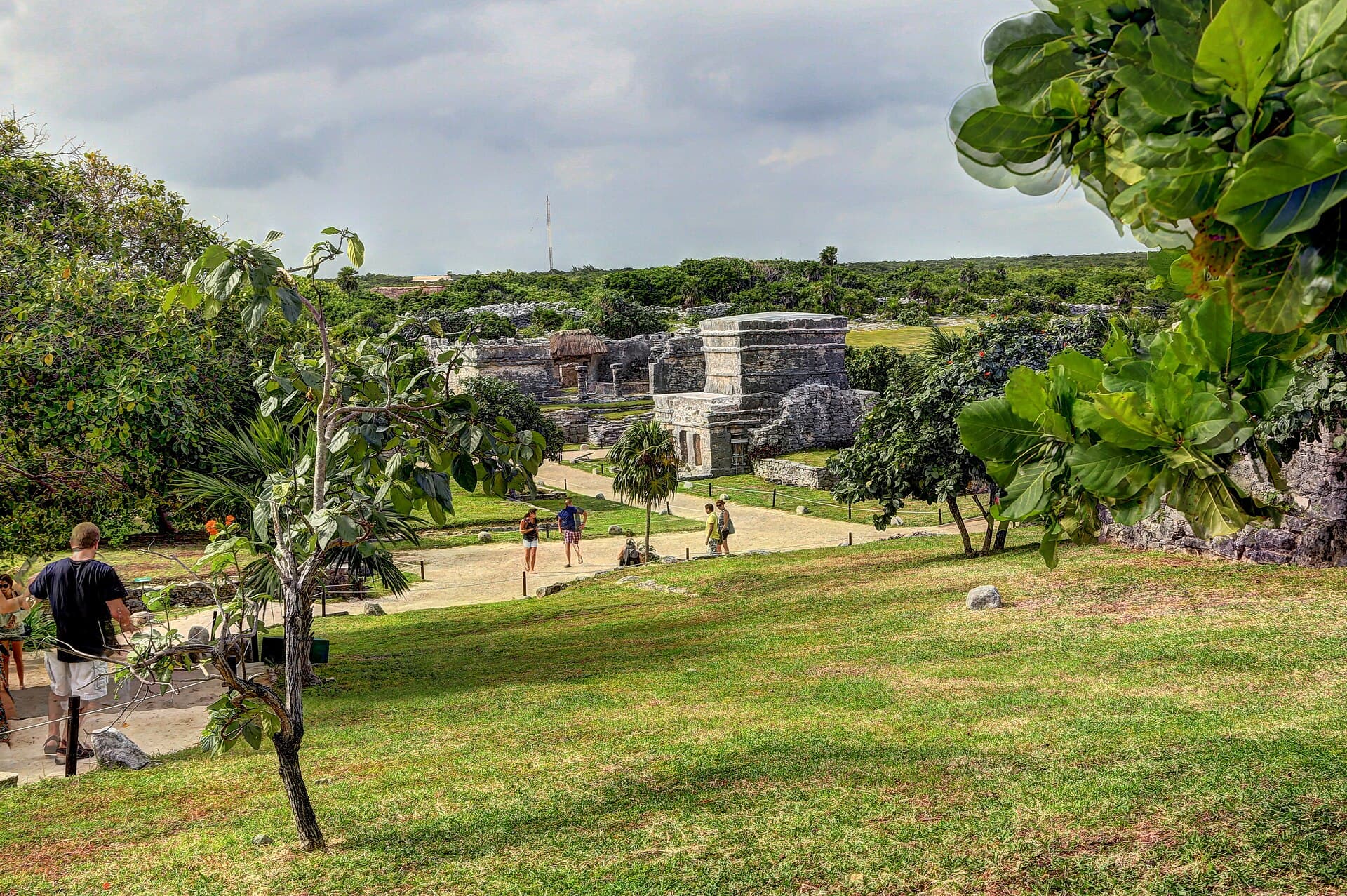
Photo: Bruce Tuten from Savannah, Georgia, United States, CC BY 2.0
Vous allez à Tulum, Mexique ? Recevez un programme jour par jour en une minute ou deux. Gratuit, sans compte pour le voir.
Planifier mon voyage à Tulum, MexiqueSargassum reaches Tulum mainly between spring and early fall. In the record 2026 season the worst came in late June and July, wash-ups lasted into mid-October, and by 11 November all five of Tulum's monitoring points were back to green. November and December are usually the clearest months. Every Tulum beach faces the open sea, so on bad days swim in a cenote or on a west-facing island beach.
When the seaweed comes, month by month
Plan for seaweed from spring into the fall, worst in early summer, and don't treat winter as a guarantee anymore. Traditionally the first landings came around March and built up from April or May, and state officials say the season generally ends in November, when the first cold fronts reach the coast. 2026 broke that pattern: Por Esto called it the first year with no defined start or end, and the state environment ministry (SEMA) counted a record 156,631 tonnes collected across the state.
November and December: usually the clearest. Esteban Amaro, who heads the Quintana Roo sargassum monitoring network, expected minimal wash-ups in both months this year, and on the state's 11 November map every Tulum point was rated low.
January to April: no longer safe to assume. In 2026 seaweed was landing in Tulum, Cozumel and Cancún in the first days of January, Por Esto reported. Tulum collected 244 tonnes in February against 59 a year earlier, and Zofemat, the authority that runs the federal beach zone, had collected more than 1,000 tonnes in Tulum by March. Amaro warns that 2027's arrivals could also begin as early as January.
May to August: the peak. By late June 2026, 92.5% of the state's beaches were rated excessive by the monitoring network, Reuters reported, and on 21 July most of Tulum's hotel zone was on red.
September and October: easing, unevenly. In early September the landings had slowed, but a Tulum rental-business owner told Uno TV the sea was still brown in places and that some hotels had closed temporarily, with several planning to reopen in October. On 9 October both hotel zones, Punta Piedra and Arco Maya were back at excessive, and Uno TV still found red and orange points on 14 October. The season was officially declared over in early November, a month later than in 2025.
Where it lands along Tulum's coast
Along the whole beach strip: Tulum's coast faces east into the open Caribbean, so its monitoring points tend to turn red together. The state's sargassum traffic light (semáforo) rates five points along Tulum's own beaches: Tulum ZA Ruinas, the beach at the archaeological site; Tulum ZH Norte and Tulum ZH Sur, the north and south hotel zones along the beach road; Punta Piedra; and Arco Maya, where the road passes through the Mayan arch into the Sian Ka'an reserve.
Heading south doesn't help. On 29 July 2026, 37 of the 40 beaches the state monitors from Tulum down to the Belize border had high accumulations, N+ reported.
The bays north of town can fare a notch better. On 9 October, when Tulum's hotel zones and Arco Maya were rated excessive, Tankah, Bahía Soliman, Xcacel-Xcacelito and Bahía Príncipe were at moderate, according to that day's map as published by Ruptura 360. That is one day's reading, not a rule, so check before you drive up.
Cleanup helps, but it can't keep pace on heavy days. Crews work five priority zones in Tulum every day, and since about September two Navy teams have used floating barriers that move with the seaweed off Tulum and Playa del Carmen, steering it to collection boats. The Navy still counts Tulum among its three hardest zones, because wind, currents and waves make fixed setups inefficient there.
How to check before a beach day
Check the latest semáforo the day before, and treat anything longer-range as a rough guide. SEMA rates 140 beaches across Quintana Roo every day on five colors: blue for no sargassum, green for low, yellow for moderate, orange for abundant and red for excessive. Green does not mean seaweed-free. The maps are posted by municipality on Facebook, and Mexican outlets such as Ruptura 360 and N+ republish them with beach-by-beach lists.
Don't mistake the Navy's alert for a beach report. The Navy's oceanographic institute measures how much seaweed is floating offshore in the Mexican Caribbean. At the start of October it lowered its alert to low, with about 10,000 tonnes at sea, yet on 9 October Tulum's hotel zones were rated excessive.
Booking between March and October? Choose refundable rooms where you can and keep beach days flexible. Staying in Tulum Pueblo, as our guide's where-to-stay section suggests, means a seaweed day costs you a taxi fare rather than a beachfront room rate.
Where to swim when Tulum's beach is brown
Go inland to a cenote, or to coasts that face away from the open sea: Cozumel's west side, Isla Mujeres and Cancún's bay.
Cenotes. They are inland, so the seaweed never reaches them. 3 days in Tulum covers Gran Cenote and Calavera on the Cobá road and how to beat the tour vans there.
Cozumel's west coast. On 9 October, while east-coast beaches such as Punta Molas, Playa Chen Río and Mirador San Martín were rated excessive, west-coast beaches including San Juan, Chankanaab, Palancar and El Cielo were low. On 21 July, when most of Tulum was on red, N+ listed Cozumel's east coast at moderate to high and El Cielo as low. The ferry leaves from Playa del Carmen; our Playa del Carmen guide has the crossing times and the last boats back.
Isla Mujeres. In late July, when most of the state's beaches were brown, every Isla Mujeres point was rated low, and all five were low again on 9 October. It's a ferry ride from Cancún, so it suits the end of a trip better than a day out from Tulum; see Isla Mujeres from Cancún.
Cancún's bay beaches. On the same October map, Playa del Niño, Langosta, Tortugas and Caracol were low while Playa Coral and Gaviota Azul were excessive. Cancún vs Tulum explains why that sheltered side matters.
For where to eat in town while the beach recovers, see our Tulum travel guide.
Vous choisissez vos dates à Tulum en fonction des algues ? Recevez nos nouveaux guides et conseils de voyage par e-mail, environ une fois par mois.
De nouveaux guides de destinations et vidéos, environ une fois par mois. Pas de spam, désabonnement à tout moment.
Réponses rapides
Can you swim in Tulum when there's sargassum?
You can, but skip the thick mats. The seaweed itself isn't toxic, but tiny organisms that live in it, such as jellyfish larvae, can irritate skin, and both Florida's health department and the US EPA advise against swimming in or near heavy seaweed. Plenty of people still go in: a Swedish tourist quoted in Reuters' July 2026 report from Tulum had been swimming that day and "expected worse."
Does sargassum smell, and can it make you sick?
Rotting sargassum gives off hydrogen sulfide, which smells like rotten eggs, and the EPA says the gas typically starts forming once mats have been on land for about 48 hours. Florida's health department says it can irritate the eyes, nose and throat and that people with asthma are more sensitive, though beachgoers in the open air generally shouldn't be harmed. If you have a breathing condition, keep away from piles waiting to be hauled off.
Is December a safe bet for Tulum's beaches?
It's usually the best bet. Esteban Amaro, head of the state monitoring network, expected minimal wash-ups in November and December 2026, and on 11 November all five Tulum points were rated low. Check the map anyway: in 2026 seaweed started landing in the first days of January, and Amaro says the 2027 season could start that early too.
Is Playa del Carmen any better for sargassum?
No. Its beaches face east like Tulum's, and in summer 2026 it was the hardest-hit municipality in Quintana Roo, with more than 35,000 tonnes removed. For cleaner water nearby, take the ferry from Playa to Cozumel's west coast.
Will barriers keep the seaweed off Tulum's beaches in 2027?
Not reliably yet. The Navy has run moving barriers off Tulum and Playa del Carmen since about September 2026 and plans 17 collection vessels for 2027, but it counts Tulum among its hardest zones, and a proposed 60-kilometer barrier in the sea between Cozumel and Tulum is still at the planning stage. Mexico News Daily also reports that agencies expect 2027 could bring even more sargassum.
Planificateur de voyage
Planifiez votre voyage à Tulum, Mexique
Donnez-moi vos dates et vos envies, et recevez un programme jour par jour tiré de mes guides. Gratuit, sans compte pour le voir.
Quand partir, où dormir, quoi éviter : tout le reste est dans le guide de voyage de Tulum, Mexique.
Plus sur Tulum, Mexique
- Cancún ou Tulum : choisissez selon les vols, les plages et votre budgetCancún l'emporte côté vols et plages de baie abritées, Tulum pour ses ruines et ses cénotes, et en 2026, les suppressions de vols, les nouveaux droits d'entrée dans les parcs et l'arrivée d'Uber changent la donne.
- 3 jours à Tulum : ruines, cénotes et Cobá avant la fouleUn programme de 3 jours à Tulum pour les lève-tôt : les ruines dès 8 h, deux cenotes sur la route de Cobá et la pyramide rouverte de Cobá, avec les tarifs 2026.
Sources et méthode de cet article
I haven't been to Tulum yet. This article is built from Quintana Roo's daily sargassum traffic-light maps as published by Mexican outlets, figures from the state environment ministry, the Navy and Tulum's beach authority reported in Mexican and international press, official US health guidance, and what Tulum residents and visitors told reporters, checked on 22 November 2026. Reddit and Tripadvisor threads couldn't be opened, so nothing here rests on them. Sargassum changes by the day; check the semáforo before you go.
Ruptura 360: Quintana Roo sargassum traffic light, 11 November 2026
Ruptura 360: beach-by-beach sargassum levels for 9 October 2026
Mexico News Daily: Sargassum season officially over, a month later than 2025 (9 November 2026)
Mexico News Daily: Riviera Maya regains its color as sargassum subsides (14 September 2026)
Mexico News Daily: Riviera Maya battles an earlier-than-expected sargassum season (18 March 2026)
Mexico News Daily: Navy sargassum vessels back at work off Tulum (4 September 2025)
Por Esto: Early sargassum in the Mexican Caribbean points to an intense 2026 (10 January 2026)
Por Esto: 2026 breaks Quintana Roo's sargassum collection record (1 October 2026)
Por Esto: The Navy's moving barriers and its 2027 sargassum plan (4 October 2026)
Uno TV: Sargassum hits tourism and the economy in Tulum (16 April 2026)
Uno TV: A lull in Tulum, but the sea is still brown (2 September 2026)
Uno TV: A new sargassum landing hits Tulum's beaches (14 October 2026)
N+: Which Mexican beaches have sargassum, 21 July 2026
N+: Sargassum traffic light on red, only five beaches free (29 July 2026)
Grupo Animal: The cleanest beaches on the sargassum traffic light (24 July 2026)
Grupo Animal: Cancún's sargassum cabinet prepares for 2027 (29 October 2026)
Reuters, via ThePrint: Record seaweed blankets Mexico's Caribbean coast (28 July 2026)
US EPA: Sargassum inundation events and human health
Florida Department of Health: Sargassum informational update
Wikivoyage: Sian Ka'an Biosphere Reserve, entering through the Mayan arch