Guide de voyage
Salvador, Bahia, Brésil Guide de voyage
Guide documenté
Traduit automatiquement de l'anglais · Voir l'original
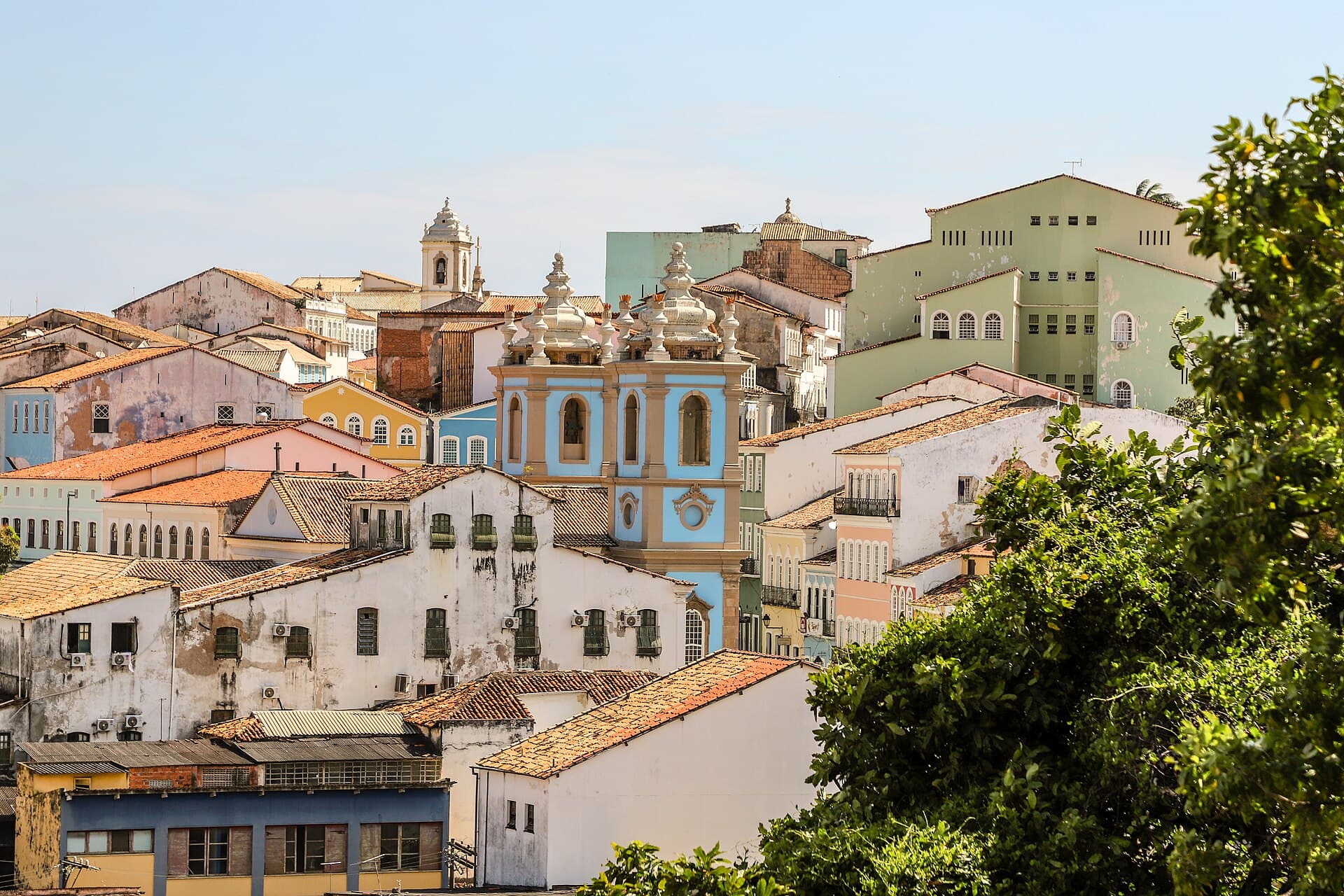
Photo: Paul R. Burley, CC BY-SA 4.0
En bref
- Best time
- August to March; April to July is the rainy season, and May is the wettest month
- Carnival 2027
- Thursday 4 to Tuesday 9 February, with pre-Carnival events from 29 January and the Festa de Iemanjá on 2 February
- Days needed
- 3 for the historic center, the bay and a beach day; 5 or more if you're coming for Carnival
- Getting around
- Ride-hailing apps (always after dark), the metro from the airport (R$4.10) and the Elevador Lacerda (R$1) between the upper and lower city
- Good for
- Afro-Brazilian history and religion, drumming and live music, Bahian food, street festivals
- Skip if
- You want a city you can wander on foot late at night, or a beach week in May
- Beach water
- Inema tests the city beaches every week; check the latest bulletin before you swim
Dans ce guide
Aperçu
Salvador, the capital of Bahia, is often called the cradle of Afro-Brazilian culture: the drums of the blocos afro, the orixás of Candomblé and the dendê-oil cooking that defines Bahian food all center here. Its hilltop historic center, the Pelourinho, is a UNESCO World Heritage Site of pastel houses and baroque churches.
The city is split by a cliff. The upper city holds the Pelourinho and ; the lower city holds the port, the Comércio district, the and, further north, the Itapagipe peninsula with the Bonfim church. The connects the two, and the beach neighborhoods of and face the Atlantic to the south.
Salvador suits travelers who come for culture, music and food more than for wandering. The recurring worries are street theft (keep your phone out of sight), empty streets after dark and city beaches that sometimes fail water-quality tests, and each has a simple fix below. If you've followed the African diaspora through our Accra guide or our Lagos guide, this is the Brazilian side of the same Atlantic story.
À éviter, et quoi faire à la place
Skip: at sunset if you hate crowds. Instead: . The lawn around the lighthouse is where couples and groups gather and applaud the sunset. Bahia Notícias' sunset roundup describes Humaitá, on the Itapagipe peninsula in the lower city, as the calm place for a quiet one.
Skip: a R$300 Olodum ticket if you're on a budget. Instead: Olodum's free Sunday rehearsals. In the 2026 summer season the Tuesday-night cost R$150–300 (first batch), while the band's Sunday rehearsals in the in January and February were free to enter.
Skip: a swim at Porto da Barra in a week Inema flags it. Instead: or Stella Maris. The state environment agency tests the city's beaches every week. In September 2026 points at Porto da Barra, Farol da Barra and parts of and Itapuã were rated unfit, while Flamengo and Stella Maris tested clean. Inema also advises staying out of the sea after heavy rain and near drains and river mouths.
Skip: the Itapuã kiosk if you're after Cira's acarajé. Instead: the stand in Rio Vermelho. In May 2026 the Acarajé da Cira company said its Itapuã kiosk was no longer part of its operation; the Rio Vermelho stand, run by Cira's daughter Juçara Santos, carries on as normal.
Skip: walking the historic center's empty streets after dark. Instead: go on event nights and ride-hail in and out. Safety guides advise against walking alone at night in Salvador and suggest a taxi home even when it costs more. In summer, Tuesday is the Pelourinho's big night: on 13 January 2026 the state culture department listed a street parade, a DJ set and Samba pra Rua alongside the Bênção do Olodum.
Meilleure période pour visiter Salvador
Come between August and March for drier weather, and in January or February if you want the festival season at full volume. April to July is the rainy season; May is the wettest month, averaging 302 mm of rain over about 22 days.
Summer festival season. The run-up to Carnival starts in late December. In the 2025–26 season Ilê Aiyê, the bloco afro founded in 1974 in Curuzu, Liberdade, held its Festival de Música Negra in the Pelourinho on 28 December, Cortejo Afro opened its summer rehearsals on 29 December, and Olodum played its ticketed Bênção every Tuesday from 6 January to 3 February, with free rehearsals on Sundays.
Lavagem do Bonfim. A Thursday in mid-January (15 January in 2026), when a street procession leaves the Conceição da Praia church in the lower city for the Bonfim church; in 2026 Olodum's percussion walk went with it as far as the Largo da Calçada.
Festa de Iemanjá, 2 February. Thousands gather at the in to leave offerings for the sea. In 2027 it falls on a Tuesday, two days before Carnival, and the city moved its Pipoco party to 29 January to avoid the clash.
Carnival 2027. The official Carnival runs from Thursday 4 to Tuesday 9 February 2027, with the Arrastão on Ash Wednesday, 10 February. The pre-Carnival week adds the Pipoco (29 January), the Furdunço and Fuzuê street parades (30–31 January), a Monday party on 1 February and Habeas Copos on 3 February: 13 days of programming in all. The three main circuits stay the same: Osmar in Campo Grande, Dodô along –Ondina and Batatinha in the Pelourinho. Ilê Aiyê's procession traditionally leaves from Curuzu, in Liberdade, on the Saturday night of Carnival. Trinidad's Carnival falls on 8–9 February 2027 and New Orleans' Mardi Gras on 9 February; if you're weighing them up, see our Trinidad Carnival guide and our New Orleans guide.
Se déplacer à Salvador
Use ride-hailing apps for most trips, and always after dark. The metro is mainly useful for the airport run, and the is the quickest way between the upper and lower city.
From the airport. A free shuttle bus runs from the terminal to Aeroporto station on metro Line 2, a ride of about four minutes; when the service opened it ran at least every 10 minutes, 5am to midnight. Pay the fare at the station (R$4.10 in January 2026, with no increase planned), ride to the Acesso Norte interchange and change to Line 1, which ends at Lapa, downtown near the historic center. From Lapa it's a short car ride to or .
Buses. The single bus fare has been R$5.90 since 5 January 2026.
Elevador Lacerda. It links the Praça Municipal in the upper city with Comércio, next to the and the Cidade da Música. It reopened in February 2025 after a renovation, with the fare raised from R$0.15 to R$1; SalvadorCard holders ride free. Hours in March 2025 were 6:30am–9:30pm on weekdays, 7am–9:30pm on Saturdays and 7am–9pm on Sundays and holidays.
On foot. The Pelourinho, and Comércio are walkable by day. At night, take a car even for short hops.
Que faire à Salvador
Most first trips start in the Pelourinho and the lower city below it. These are the classics; the hidden gems above fill in the rest.
The Pelourinho and the Terreiro de Jesus. The UNESCO-listed core, where capoeira demonstrations run through the day in the squares. Stand too close to a roda and you may be pulled in for a round.
. Salvador's "golden church", known for its gilded interior.
. On the Terreiro de Jesus, it covers the African rituals and traditions behind Bahian culture; National Geographic calls it the pick of the city's museums.
. Immersive, themed exhibitions on Carnival, a few steps away on the Praça Ramos de Queiroz.
and the . Ride down to the lower city (R$1) and look into the Mercado Modelo's restored underground arcades, now a gallery of works honoring the orixás and Black resistance in Salvador; A Tarde listed it as open Monday to Saturday 9am–6pm and Sunday 9am–2pm in April 2026.
. The lighthouse at the tip of holds the Nautical Museum of Bahia, and the lawn around it is the city's most popular sunset spot.
. The church at the heart of January's Lavagem do Bonfim, on the Itapagipe peninsula; pair it with and an ice cream in Ribeira.
Où loger à Salvador
is the easiest base for a first trip; suits food and nightlife; suits travelers who want the historic center and don't mind taking cars at night.
Barra. On the beach, with Porto da Barra and the lighthouse on your doorstep, and one of the three neighborhoods safety guides point visitors to, along with Rio Vermelho and the Pelourinho. During Carnival the Dodô circuit runs along the Barra–Ondina seafront, which is either a bonus or a reason to stay elsewhere, depending on your plans.
Rio Vermelho. Salvador's bohemian neighborhood: the acarajé stands of Cira and Dinha, and , and bars around the and Largo de Santana that stay open late. It's also where the Festa de Iemanjá happens on 2 February.
Santo Antônio Além do Carmo. The historic neighborhood just north of the Pelourinho, with a handful of cultural bars. You're close to the sights by day, but plan on ride-hailing after dark.
The Pelourinho. Atmospheric by day and on busy event nights; as everywhere in Salvador, plan on cars rather than walking at night.
Où manger et boire à Salvador
Bahian food is African-rooted cooking built on dendê (palm) oil, coconut milk and dried shrimp, and the two dishes to know are moqueca, a coconut-milk seafood stew, and acarajé, a black-eyed-pea fritter split and filled with vatapá, caruru and shrimp. Eat acarajé from the baianas' stands in , moqueca by the water, and save one night for the city's tasting menus.
, Largo da Mariquita (Rio Vermelho). Known for a crisp fritter with a generous filling of vatapá, caruru, shrimp and pepper; Cira's daughter Juçara Santos runs the stand.
, Largo de Santana (Rio Vermelho). The stand so well known the square is called the Largo da Dinha, popular with artists, locals and visitors; the bars around it stay open late.
(Rio Vermelho). Heritage Bahian cooking from chef Leila Carreiro; see Hidden gems.
(Rio Vermelho). Chef Tereza Paim's Northeastern cooking in a house built in 1836: the Moqueca Trilogia do Mar, the filé with tamarind or the lamb stew. In December 2024 it opened daily from noon, and in October 2026 it won the best sustainability program in Correio's Melhores da Gastronomia awards.
(Solar do Unhão). Moqueca with the day's catch at the water's edge; lunch only. See Hidden gems.
(Comércio). A bayfront dining room that won best service and best ambience in the 2026 Melhores da Gastronomia awards; in June 2026 grilled scallops were R$192 and the tapioca pudding with cajá sorbet R$42. Mistura Contorno, a few minutes along the same waterfront road, is known for its grilled seafood platter.
(Pituba), the splurge. Fabrício Lemos and Lisiane Arouca's tasting menus reinterpret Bahian cooking. It was named Salvador's best restaurant in October 2026, ranked 4th in Exame's Brazil top 100 and 52nd on Latin America's 50 Best extended list in 2025. The Menu Recôncavo was R$420 (R$740 with wine pairing) in June 2026, with a vegetarian menu at R$320; reservations are required.
(Ribeira). Tapioca ice cream on the Largo da Ribeira since 1931; see Hidden gems.
Jam no MAM (Solar do Unhão). Saturday jazz by the bay; see Hidden gems.
(Porto da ). A seafront restaurant-bar with sea views, a seafood-focused menu and a strong wine list, popular at sunset.
(). A beach bar on one of the northern beaches that tested clean in September 2026; it won best beach experience in Correio's 2026 awards, and older guides note live music on some afternoons.
(Pelourinho, January and early February). Olodum's Tuesday-night show on the Praça das Artes in front of the Casa do Olodum: gates at 7pm, band from 8pm, R$150–300 in the first ticket batch of 2026 on Meu Bilhete. Editions have sold out.
Purgatório. The city's most decorated cocktail bar (476th on the Top 500 Bars list in 2025, best cocktail list in Correio's 2026 awards) works by reservation only and gives out its address when you book. It serves only cocktails, about 64 of them on the menu.
Erreurs courantes
Booking a beach trip for May. April to July is the rainy season, and May averages about 22 days of rain. Fix: come between August and March, or plan wet days around the Cidade da Música and the MAM.
Using your phone on the street. Safety guides say not to text or count money on the street. Fix: step into a shop or café to check maps and messages, and carry only the cards you need.
Swimming without checking the water bulletin. Popular beaches such as Porto da fail some weekly tests. Fix: check Inema's latest bulletin, and skip the sea after heavy rain or near drains and river mouths.
Treating Carnival as a long weekend. In 2027 the city's program runs 13 days, from 29 January to 10 February, with the Festa de Iemanjá on 2 February in the middle. Fix: decide which events matter to you and which circuit you want to be near (Osmar, Dodô or Batatinha) before you book a room.
Walking back after dark. Streets that are busy by day can be empty late at night. Fix: ride-hail, even for short distances.
Accepting "free" gifts at tourist sites. Safety guides advise ignoring people who offer free gifts at attractions. Fix: say no and keep walking.
Itinéraires à Salvador
One day
Start early at the , then ride up to the Pelourinho for São Francisco church and the on the Terreiro de Jesus. Take the down to the Cidade da Música (closed Mondays), then ride along the bay to the Solar do Unhão for lunch at (it closes by late afternoon), the MAM's galleries and the sunset, with the Jam no MAM if it's a jam Saturday. Finish with acarajé from Cira or Dinha in .
Two days
Day one as above. On day two, swim at Porto da if that week's Inema bulletin rates it fit, then lunch at in Rio Vermelho, which opens daily at noon. In the afternoon head to the Itapagipe peninsula: the Bonfim church, an ice cream at the , and sunset at .
Three days
Add a northern beach day at , with lunch and a cold drink at . In the evening, go to the if it's a Tuesday in January or early February; otherwise book 's tasting menu or a table at .
FAQ : Salvador
Is the Pelourinho safe to visit?
It's one of the three neighborhoods safety guides tell visitors to stick to, along with and . Visit by day or on busy event nights, keep your phone out of sight on the street, and take a car rather than walking through empty streets after dark.
When is Carnival 2027 in Salvador?
The official Carnival runs from Thursday 4 to Tuesday 9 February 2027, with the Arrastão on Ash Wednesday, 10 February. Pre-Carnival events start on 29 January and the Festa de Iemanjá is on 2 February, so the city's program covers 13 days. The main circuits, Osmar (Campo Grande), Dodô (Barra–Ondina) and Batatinha (Pelourinho), are unchanged for 2027.
How do I get from the airport to the city?
Take the free shuttle bus from the terminal to Aeroporto metro station, then the metro (R$4.10 in 2026) to Acesso Norte and Line 1 to Lapa, near the historic center. For Barra or Rio Vermelho, or after dark, a ride-hailing car from the terminal is simpler.
Can you swim at Salvador's city beaches?
Check first. Inema tests the beaches every week; in September 2026 points at Porto da Barra and were rated unfit while Flamengo and Stella Maris tested clean. Stay out of the sea after heavy rain and near drains or river mouths.
What is the Festa de Iemanjá?
Every 2 February, thousands of people gather at the in Rio Vermelho to leave offerings for Iemanjá, the orixá of the sea. In 2027 it falls on a Tuesday, two days before Carnival starts.
Where should I stay in Salvador?
Barra is the easiest first-timer base, with the beach and the lighthouse close by. Rio Vermelho is better for food and nightlife, and , just north of the Pelourinho, suits travelers who want the historic center and don't mind taking cars at night.
Prêt pour Salvador, Bahia, Brésil ?
Planifiez le voyage, ajoutez-le à un voyage en préparation ou gardez ce guide pour plus tard.
Sources et méthode de ce guide
I haven't been to Salvador yet. This guide draws on 56 of the 84 sources reviewed: Salvador's newspapers A Tarde and Correio, the Bahia Notícias news site, Brasil de Fato, Bahia's state culture department, National Geographic, CNN's restaurant picks, food writers and travelers' own published write-ups, cross-checked on 6 November 2026. Reddit threads couldn't be opened directly, so traveler complaints come from local news coverage and travel-safety guides. Prices are given with the month they were reported; check them before you go.
A Tarde: Jam no MAM opens its 2026 season (January 2026)
A Tarde: the Bahia Symphony Orchestra at Jam no MAM, with gate times and prices (October 2026)
A Tarde: the MAM-BA's hours during Museum Week (May 2026)
Bahia Notícias: where to watch the sunset in Salvador (March 2023)
A Tarde: Suzana's Ré-restaurante, a story of resilience (November 2024)
Correio: the Gamboa stone beach and Dona Suzana's restaurant (January 2019)
Migrationology: a seafood lunch at Ré Restaurante Dona Suzana
Migrationology: one day in Salvador, from São Joaquim market to the Solar do Unhão
Correio: all the flavors of Bahia at the Feira de São Joaquim (May 2020)
Brasil de Fato: the Olojá festival brings 96 terreiros to the Feira de São Joaquim (March 2026)
CET Academic Programs: a student's week exploring Salvador (May 2024)
Bahia Notícias: Ponta de Humaitá renovated and reopened (May 2019)
A Tarde: Jammil's free sunset show at Ponta de Humaitá (August 2026)
Bahia.ws: Ponta de Humaitá's lighthouse, church and fort (2026)
Correio: the Sorveteria da Ribeira's tapioca among the world's most iconic ice creams (May 2026)
CNN Brasil: the Sorveteria da Ribeira on TasteAtlas's list (July 2023)
Bahia Notícias: CNN's seven Salvador restaurants, including Origem and Dona Mariquita (April 2026)
Correio: what it costs to eat at Bahia's restaurants in Exame's Brazil top 100 (June 2026)
Correio: the 40 winners of the Melhores da Gastronomia Salvador 2026 awards (October 2026)
World Travel Guide: a chef's guide to eating and drinking in Salvador (2014)
Bahia Notícias: where to eat acarajé in Salvador (December 2024)
Correio: Acarajé da Cira's Itapuã kiosk leaves the brand (May 2026)
Correio: Rio Vermelho, where the night always happens (December 2025)
Bahia Notícias: a day in Rio Vermelho, with Casa de Tereza's hours (December 2024)
A Tarde: five places to get off the beaten track, including the Cidade da Música (April 2026)
Melhores Destinos: Cidade da Música da Bahia hours and prices
Bahia Notícias: the Cidade da Música's first months (February 2022)
A Tarde: Olodum's 2026 summer schedule and ticket prices (December 2025)
Bahia culture department: a Tuesday night in the Pelourinho with the Bênção do Olodum (January 2026)
A Tarde: Purgatório on the Top 500 Bars list (July 2025)
A Tarde: discreet facades and the reservation-only Purgatório (August 2024)
A Tarde: the 13-day Carnival 2027 calendar (February 2026)
Correio: the Pipoco moves to 29 January to avoid the Festa de Iemanjá (February 2026)
A Tarde: Carnival circuits unchanged for 2027 and 2028 (February 2026)
Correio: when Salvador's rainy season starts (February 2026)
Bahia Notícias: Inema's beach bulletin 29/2026 (September 2026)
A Tarde: no increase in the metro fare, and the new bus fare (January 2026)
Bahia Notícias: the shuttle bus between the airport and the metro station (April 2018)
Wikipedia: Salvador Metro lines and stations
Bahia Notícias: the Elevador Lacerda's new R$1 fare (January 2025)
Bahia Notícias: the Elevador Lacerda's first month after renovation, with hours (March 2025)
National Geographic: an inside guide to Salvador, cradle of Afro-Brazilian heritage
Une question sur l'organisation de ce voyage ? Posez-la dans la communauté.
Recevez le prochain guide de voyage
De nouveaux guides de destinations et vidéos, environ une fois par mois. Pas de spam, désabonnement à tout moment.