Travel guide
Bangkok, Thailand Travel Guide
Researched guide
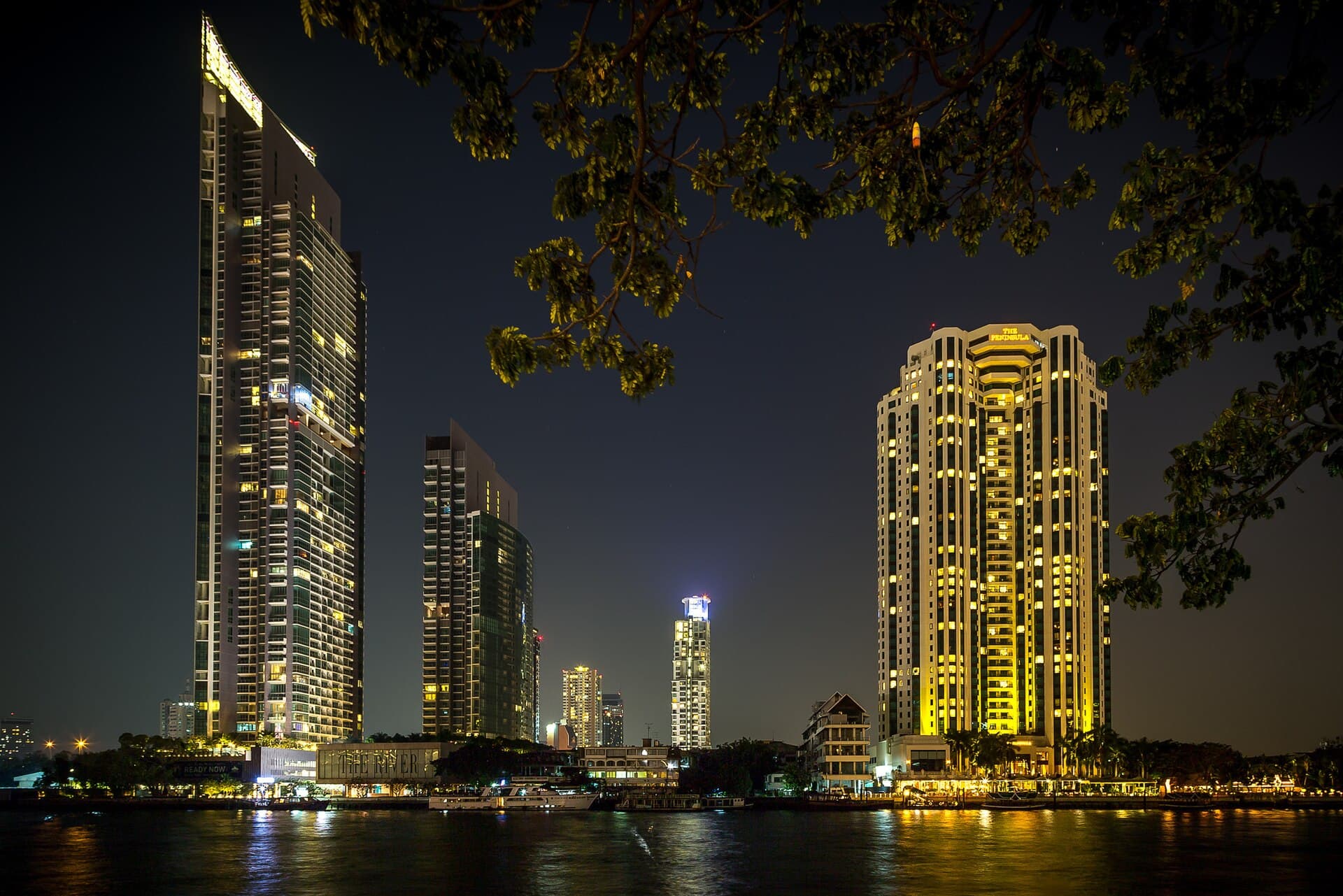
Photo: Wolfgang Weber, CC BY 3.0
At a glance
- Best time
- November to February (the cool, dry season)
- Days needed
- 3–4, plus a day trip if you want Ayutthaya or a floating market
- Getting around
- BTS Skytrain, MRT and river boats; Grab or Bolt instead of street taxis
- Budget tip
- Thai ATMs charge foreign cards about 220 baht per withdrawal
- Good for
- Street food, temples, markets, nightlife, big-city energy on a budget
- Skip if
- You can't handle heat, humidity and crowds
In this guide
Overview
Bangkok is a sprawling, humid megacity of more than 10 million people, built along the curves of the Chao Phraya River. Most first-timers spend almost all of their time in two places: the Old Town temples (the , Wat Pho, ) and the malls and rooftop bars along Sukhumvit.
Both are worth seeing, but the complaint that comes up most often is that people saw "the list" and missed the city. The places travelers remember are usually a boat ride or a short walk from the famous sights: the old Chinese and Portuguese riverside neighborhoods, a canal still used by families, and a jungle bike loop across the river.
This guide leads with those, then covers the practical side: getting around without being overcharged, which scams to expect near the temples, and when to go.
Skip or swap
Skip: anyone near the who says it's closed today. Instead: walk to the gate and see for yourself. This is Bangkok's best-known scam. A friendly stranger says the palace is shut for a ceremony and offers a cheap tuk-tuk tour that ends at a gem or tailor shop. The palace is open daily from 8:30am to 3:30pm and closes only for official royal ceremonies.
Skip: Damnoen Saduak floating market. Instead: Khlong Lat Mayom, or Bang Nam Phueng in . Damnoen Saduak is two hours away and built around tour groups and souvenirs. Khlong Lat Mayom, in Bangkok's Taling Chan district, is much smaller but local, with food at local prices. It runs on weekends.
Skip: Khao San Road as your base. Instead: stay on or Soi Rambuttri nearby. You keep the bars and cheap food but lose the worst of the touts, the inflated prices and the pickpocketing that reports keep mentioning.
Skip: taxis waiting outside hotels and sights. Instead: book Grab or Bolt, or flag a passing cab a block away. Parked taxis at landmarks routinely refuse the meter. App fares are fixed before you get in.
When to go
November to February is the cool, dry season and the best time to visit. Temperatures run about 21–32 °C (70–90 °F) and humidity is lower. It's also the busiest and most expensive season for hotels.
March to May is the hot season, regularly in the mid-30s °C and above. Songkran, the Thai New Year in mid-April, turns the city into a three-day water fight. Come for it deliberately, or avoid it.
June to October is the rainy season: usually a heavy afternoon downpour rather than all-day rain, with fewer visitors and lower prices. Pack a light rain layer and plan museums or malls for the afternoons.
Loy Krathong, usually in November, is when people float candlelit offerings on the river and canals. It's a good reason to time a cool-season trip.
Getting around
Use the trains and boats, not the roads. Bangkok's traffic is notorious. The BTS Skytrain and MRT subway cover Sukhumvit, Silom, Siam and Chinatown, and the Airport Rail Link runs from Suvarnabhumi airport into the city.
The river is the Old Town's transit line. The Chao Phraya Express orange-flag boat costs 18 baht a ride (checked September 2026) and stops at the piers for the (Tha Chang), Wat Pho (Tha Tien) and Chinatown. The blue-flag tourist boat costs more but gives commentary. Cross-river ferries to , Wang Lang and cost a few baht.
Book cars through an app. Grab and Bolt show the price before you ride. Street taxis are cheap when the meter is on; if a driver won't use it, get out and flag the next one.
Tuk-tuks are for the experience, not for value. Agree a price before you get in, and decline any offer of a "tour" that includes shopping stops.
Where to stay
Choose your base by how you'll get around: near a BTS or MRT station, or near a river pier.
Riverside and the Old Town (Rattanakosin, Banglamphu). Walking distance to the temples and on the river boats. Quieter at night, apart from the Khao San area.
Silom and Sathorn. Central, well connected by both BTS and MRT, and close to the river at Saphan Taksin. A good balance for a first trip.
Sukhumvit (Asok to Phrom Phong). Malls, nightlife and the most hotels, all on the BTS line. It's 30–45 minutes from the Old Town by train and boat.
Chinatown (Yaowarat and ). For the street food and the atmosphere. There are more boutique hotels here than there used to be, and the MRT stops at Wat Mangkon.
Common mistakes
Falling for the "it's closed" line. It's run near the and Wat Pho, and it always ends at a shop. Anyone who stops you on the street to tell you where to go is selling something.
Wearing shorts to the Grand Palace. You'll be turned away or sent to rent clothes. Shoulders, knees and ankles must be covered; sleeveless tops and ripped jeans aren't allowed.
Taking many small ATM withdrawals. Each one costs about 220 baht, and some machines now charge more for foreign cards. Withdraw larger amounts less often, and decline the machine's own exchange rate.
Planning the day around the roads. A 5 km taxi ride can take an hour at rush hour. Group your days by train line or by stretch of river.
Underestimating the heat. Visit temples at opening time, spend the middle of the day indoors, and drink more water than feels necessary.
Sample itineraries
One day
The at 8:30am opening, then Wat Pho next door. Take the ferry to , then back across to lunch at . In the late afternoon, walk , then have street-food dinner on Yaowarat Road in Chinatown.
Two days
Day two: take a longtail boat across to early and cycle until late morning. Head back for an afternoon in the Siam malls or at Jim Thompson House, then catch sunset at and spend the night on Sukhumvit.
Three days
Day three: take the ferry to for khanom farang and the river walk. Visit the on Khlong Bang Luang in the afternoon. At the weekend, swap one of these for Chatuchak and Khlong Lat Mayom market in the morning.
FAQ
How many days do you need in Bangkok?
Three to four days covers the Old Town temples, Chinatown, a river neighborhood or two, and . Add a day for a trip to Ayutthaya or a floating market.
Is the Grand Palace worth it?
Yes, if you go at the 8:30am opening and dress for the code (shoulders, knees and ankles covered). Tickets are 500 baht. Ignore anyone outside who says it's closed.
What's the best way to get around Bangkok?
Use the BTS Skytrain and MRT for the modern city, the Chao Phraya Express boat (18 baht) for the Old Town, and Grab or Bolt for everything else. Avoid parked taxis at tourist sights.
When is the best time to visit Bangkok?
November to February, the cool and dry season. From June to October it rains most afternoons, but it's cheaper and quieter. Mid-April brings the Songkran water festival.
Is Khao San Road worth staying on?
Only if nightlife is the whole point. , a few minutes' walk away, have the same bars and food with fewer touts and scams.
Ready for Bangkok, Thailand?
Plan the trip, add it to one you're building, or save this guide for later.
Sources and how this guide was made
I haven't been to Bangkok yet. This guide is built from traveler reports on Reddit and travel forums, local media (Time Out Bangkok, the Bangkok Post, Khaosod English), guidebooks and official information. Every hidden gem was recommended by at least three independent sources and checked as open and operating on 30 September 2026. If something here has changed, tell me in the community.
Hidden spots in Bangkok only locals know (Time Out Bangkok, Aug 2025)
Bangkok's green lung, Bang Krachao (Lonely Planet)
Bangkok's hidden gem: Talat Noi (Bangkok Post)
How the Portuguese influenced Thailand's cuisine (National Geographic)
A review of Bangkok's new wetland park (Khaosod English)
Grand Palace tickets, dress code and hours
Khao San Road safety and scams (Travelfish)
Khlong Lat Mayom, Bangkok's local floating market (Maptrotting)
Chao Phraya Express boat fares
Using Bangkok taxis (Jonesy in Thailand)
The complete guide to ATMs in Thailand (Thailand Starter Kit)
Have a question about planning this trip? Ask it in the community.
Get the next trip guide
New destination guides and videos, roughly monthly. No spam, unsubscribe anytime.