Travel guide
Siem Reap & Angkor, Cambodia Travel Guide
Researched guide
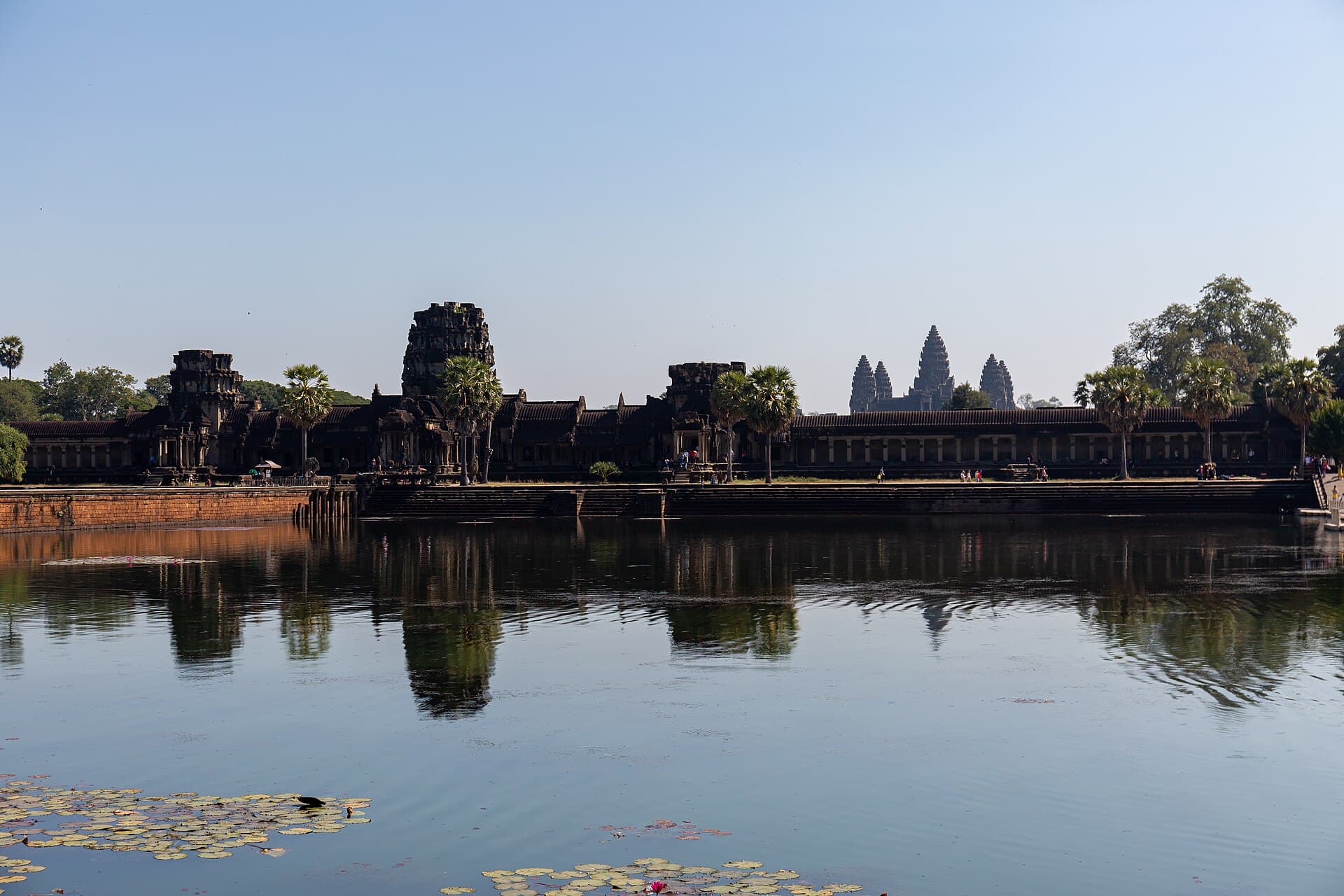
Photo: Balon Greyjoy, Public domain
At a glance
- Best time
- November to February for dry, clearer weather (and the biggest crowds); May to October for far fewer people
- Days needed
- 3 days on a 3-day pass covers the big temples plus the quiet ones without rushing
- Getting around
- tuk-tuk or car with driver hired by the day; there is no public transport to the temples
- Passes
- $37 for 1 day, $62 for 3 days used within 7, $72 for 7 days used within 30, sold only by Angkor Enterprise
- Separate tickets
- Beng Mealea ($10) and Kbal Spean ($5) are not covered by the Angkor pass
- Good for
- history and architecture lovers, photographers willing to start before dawn
- Skip if
- you can't handle heat, steep stone steps and very early starts
In this guide
Overview
Siem Reap is the small Cambodian city that serves as the base for the Angkor Archaeological Park, the former capital of the Khmer Empire. is just one temple among dozens spread across the park, which is why first-timers who expect a single site are often caught out by the distances and the need for a driver.
The guide's focus is the problem travelers raise most: how to see Angkor without spending every hour in the same crowds at Angkor Wat, and . The answer is mostly timing and route. Sunrise and mid-morning are the busiest times at the famous temples, while smaller temples on forest tracks, the and sites outside the main circuits stay quiet most of the day (Grantourismo).
Visitor numbers are also lower than they were. Angkor drew 428,223 international visitors from January to July 2026, down 30.7% on the same period of 2025, with border tensions with Thailand among the reasons cited (The Star). Quieter temples do not mean the peak moments are empty, though: sunrise at Angkor Wat still draws a crowd.
Skip or swap
Skip: Chong Kneas floating village. Instead: or . Chong Kneas is the closest lake village to town, which is why hotels push it, and travelers repeatedly report boat stops where they're pressed to buy overpriced bags of rice for a school or orphanage (Grrrl Traveler). Local reporting also found residents frustrated that a new ticketing system cut their share of the income (VOD).
Skip: only watching sunrise from 's north reflecting pool. Instead: , or Angkor Wat's west approach before the moat. A tour company's sunrise guide estimates 3,000 to 5,000 people crowd that pool on a normal peak-season morning (Adventures Cambodia). If you do go, walk round to the quieter east side of Angkor Wat after sunrise (Grantourismo).
Skip: at the last minute. Instead: or Pre Rup for sunset. The APSARA Authority limits the hilltop to 300 people at a time (TravelPulse), and Lonely Planet advises arriving around 4pm to get up for sunset.
Skip: at 9am. Instead: go at opening or late afternoon. Travelers report tour buses arriving from around 8:30 to 9:30am (Never Ending Voyage). Remember the separate $10 ticket.
Best time to visit Siem Reap & Angkor
Go between November and February for the driest weather, but expect the biggest crowds then; go between May and October if you'd rather share the temples with far fewer people (Adventures Cambodia).
Dry season (November to April). December and January are the most reliable for sunny, dry days and are peak season (Lonely Planet). March and April get very hot: April is the hottest month, with average highs above 35°C, so sightseeing at dawn is the only comfortable option (Rough Guides).
Rainy season (May to October). Rain usually comes in the afternoon, the temples are greener and the dust settles. Rainfall peaks around September.
Dates to avoid or plan for. Weekends are busier year-round, and Khmer New Year (April), Pchum Ben (usually September or October) and the Water Festival (November) bring large domestic crowds (Grantourismo). Around the equinoxes (roughly 21 to 23 March and September) the sun rises over 's central tower and the crowds are extreme.
Getting around Siem Reap & Angkor
Hire a tuk-tuk or a car with a driver by the day; the temples are spread over a large area and there is no public transport to them.
Tuk-tuk rates. Published rates seen in October 2026 start at about $20 for the small circuit and about $25 for the grand circuit, more for far sites like and (Visit Angkor). Agree the route and price before setting off. , Kbal Spean and Prek Toal are better done by car or on an organized trip.
Arriving. Siem Reap's airport (SAI) is about an hour from town. A shuttle bus costs about $8, and the airport transport desk lists a set taxi fare of $35 for one to three passengers (HelloAngkor). Grab and PassApp also work (South East Asia Backpacker).
From Thailand. Travelers combining Angkor with Bangkok (see our Bangkok guide) have long gone overland via the Poipet border, but border tensions between Thailand and Cambodia since 2025 have disrupted the land crossings, so check the current status before relying on it; flying is the dependable option.
Guides. Temple guides are licensed by the Ministry of Tourism, and about 3,000 hold an Angkor licence (Adventures Cambodia). You don't have to hire one, but travelers say it's worth it for , and Banteay Srei on a first visit. Tuk-tuk drivers usually aren't licensed guides.
Where to stay in Siem Reap & Angkor
Stay in central Siem Reap, close to the river or the Wat Bo area, which keeps you about 15 minutes from the ticket office and the temple checkpoints.
Old Market and Pub Street area. The most convenient for restaurants and nightlife, but the loudest at night. Book a room away from Pub Street itself if you plan 4:30am starts.
Wat Bo area, east of the river. Quieter streets within walking distance of the centre, and the airport shuttle drop-off is close by.
Outside the centre. Resorts towards the temples are calmer, but you'll depend on a tuk-tuk for every meal.
Common mistakes
Buying the pass the morning of sunrise. Ticket queues before dawn cost you the best spots. Buy online from Angkor Enterprise or at the Road 60 ticket office the day before (Adventures Cambodia).
Buying a pass from anyone but Angkor Enterprise. Tickets bought from other sellers aren't valid. Three- and seven-day passes carry your photo and can't be shared or transferred.
Assuming the Angkor pass covers everything. ($10), ($5) and Koh Ker ($15) each need their own ticket (Angkor Enterprise).
Dressing for the heat, not the temples. Shoulders and knees must be covered, and visitors who don't comply are asked to change (Traveller). The steep climb to 's upper level (the Bakan) has the strictest checks, and children under 12 aren't allowed up.
Filling in the arrival card on a fake site. Cambodia's e-Arrival card is free on the official site, arrival.gov.kh; look-alike sites such as cambodia-e-arrival.com charge a fee (Asia News Network).
Trying to do it in one day. One day forces you into the famous temples at their busiest hours. A 3-day pass ($62, usable on any three days within a week) costs less than two single-day passes.
Sightseeing at midday in March and April. Start at dawn, rest from late morning to mid-afternoon, and go back out for the late-afternoon light.
Siem Reap & Angkor itineraries
One day
Buy a 1-day pass the evening before. Watch sunrise at , walk across the road into , then continue to before 8am, when the sunrise crowd arrives. Go through Angkor Thom to , then slip behind the Terrace of the Leper King into . After a long lunch out of the sun, visit Angkor Wat in the late afternoon, when the morning tours have left.
Two days
Day one as above. On day two take the grand circuit in the early morning: Preah Khan, and East Mebon, with via the forest track near Ta Keo on the way back. Finish at in the Roluos Group for sunset.
Three days
On day three, go early to to beat the tour buses, continue to (its own $5 ticket, last entry reported mid-afternoon) and stop at on the way back. Between December and early February, swap this day for a full-day trip to the Prek Toal Bird Sanctuary.
Siem Reap & Angkor FAQ
Which Angkor pass should I buy?
For most travelers, the 3-day pass at $62, used on any three days within seven, is the best value. The 1-day pass is $37 and the 7-day pass is $72 used within 30 days (Angkor Enterprise). Buy only from Angkor Enterprise.
Do I need a guide at Angkor?
No, you can visit on your own with a driver and a guidebook. Licensed guides are recommended for a first visit to , and , where most of the meaning is in the carvings (Adventures Cambodia).
Is sunrise at Angkor Wat worth it?
For photographers and first-timers, travelers mostly say yes, as long as you accept the crowds and noise (TakeMeTour). If you dislike crowds, watch sunrise at and visit Angkor Wat in the late afternoon instead.
What time do the temples open?
The Angkor pass allows entry from 5am, and the park closes at 6:30pm (Angkor Enterprise). Angkor Wat opens at 5am for sunrise; many other temples open later in the morning, so check before planning a dawn start elsewhere.
Can I visit Angkor in the rainy season?
Yes. Rain usually falls in the afternoon, the temples are greener, and crowds are much smaller between May and October. 's riverbed carvings are harder to see when the water is high.
Ready for Siem Reap & Angkor, Cambodia?
Plan the trip, add it to one you're building, or save this guide for later.
Sources and how this guide was made
I haven't been to Siem Reap or Angkor yet. I reviewed 88 sources and kept 70, including traveler reports on travel forums and blogs, local Cambodian media, the official Angkor Enterprise ticket site and the APSARA Authority, cross-checked on 11 October 2026. Prices and opening times change, so check the official ticket site before you go.
Angkor Enterprise: available tickets
Adventures Cambodia: Angkor Wat tickets (checked on the official site, August 2026)
Adventures Cambodia: Angkor Wat sunrise guide
Grantourismo: Angkor Wat without the crowds
Cambodge Mag: the secret temple of Ta Nei
Asia for Visitors: Preah Pithu
APSARA Authority: Banteay Samre is a good choice for tourists
Rusty Compass: Roluos Group temples
About Asia Travel: Roluos Group
HelloAngkor: Prek Toal Bird Sanctuary
Lonely Planet: Prek Toal Bird Sanctuary
About Asia Travel: Kompong Khleang
Grrrl Traveler: the floating village and boat scams
VOD: new tourist boat system frustrates floating village
Never Ending Voyage: Beng Mealea
TravelPulse: visitor limits for sunset at Phnom Bakheng
HelloAngkor: Siem Reap Angkor International Airport
Adventures Cambodia: Angkor tour guides
Asia News Network: immigration department warns of fake arrival website
Traveller: Angkor Wat dress code
The Star: Angkor revenue drops 29% in 2026
Have a question about planning this trip? Ask it in the community.
Get the next trip guide
New destination guides and videos, roughly monthly. No spam, unsubscribe anytime.