Reiseführer
Kyoto, Japan Reiseführer
Recherchierter Reiseführer
Maschinell aus dem Englischen übersetzt · Original ansehen
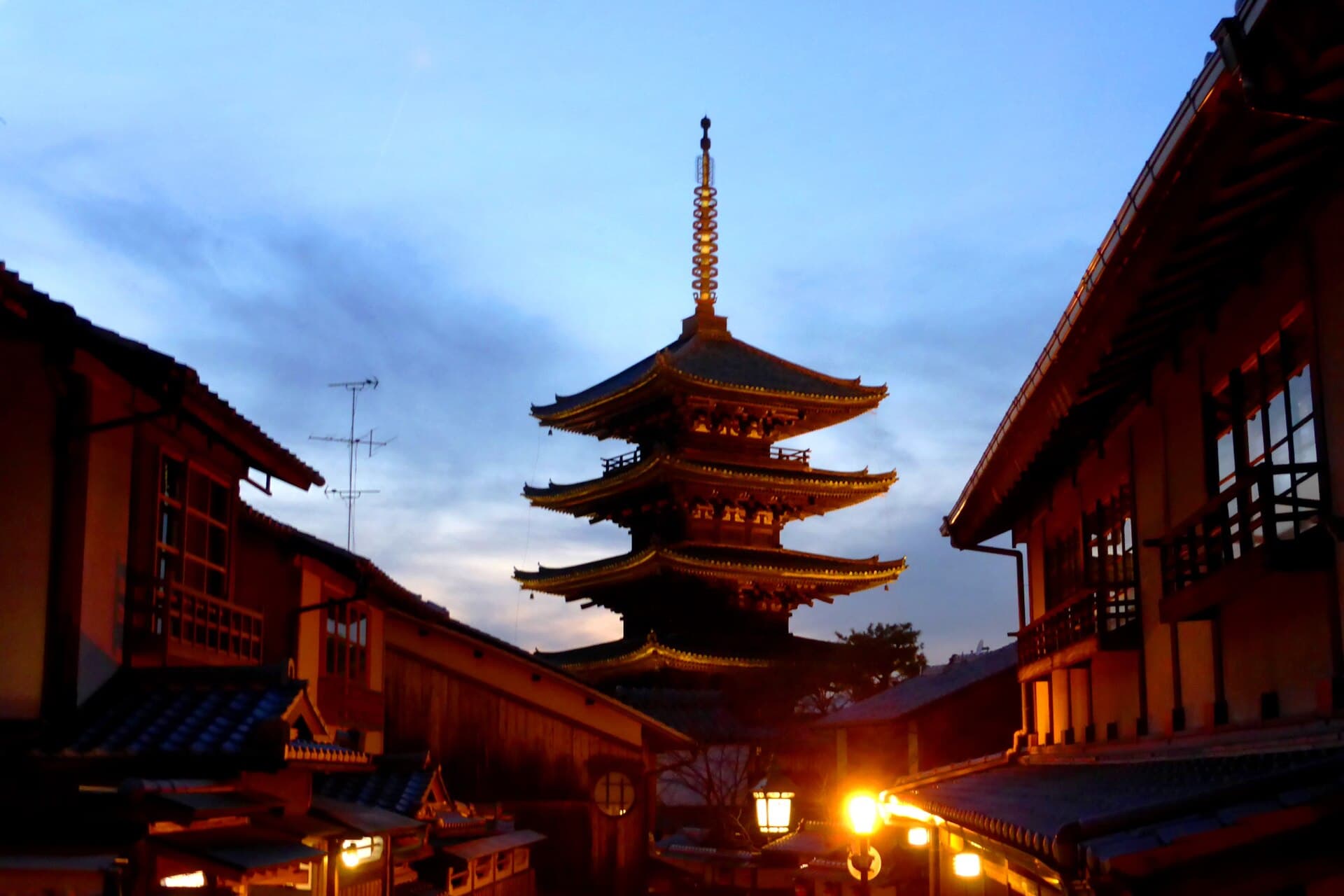
Photo: ttshr1970, CC BY 3.0
Auf einen Blick
- Best time
- May, or late October to mid-November; peak autumn color in late November brings the biggest crowds
- Days needed
- 3 days for the city, plus a day for Nara or Uji
- Getting around
- trains and subway for distance, buses for the last stretch; Subway & Bus 1-Day Pass ¥1,100 (November 2026)
- Good for
- gardens and temples, craft lovers, noodle and sweets fans, early risers
- Skip if
- you can only come on an early-April or late-November weekend and hate crowds
- Hotel tax
- ¥200 to ¥10,000 per person per night since 1 March 2026, depending on the room rate
- Bus fares
- ¥230 a ride now; a visitor fare of about ¥350 to ¥400 is planned for fiscal 2027
In diesem Reiseführer
Überblick
Kyoto, Japan's old imperial capital, is the place to see temples, gardens and traditional crafts, and it rewards travelers who plan around its crowds. The most common complaint on Reddit's Japan travel forums is not the city itself but sharing Fushimi Inari, and the Arashiyama bamboo grove with everyone else, and squeezing onto city buses. Commenters who defend Kyoto say the people who call it overrated only saw the famous sights, at the busiest hours.
This guide answers the practical questions first: when to go, how to get around without relying on buses, where to stay and what the March 2026 hotel-tax rise adds to the bill. Then it points to eight places that local writers, garden specialists and Kyoto's own tourism board keep recommending, which are open in 2026 and missing from the mainstream "things to do" lists.
It suits first-timers with three days, garden and craft lovers, and anyone happy to start early. Plan each day around one or two districts, and take the train wherever one goes.
Lieber auslassen – und stattdessen
Most swaps here trade a crowded hour, a closed restaurant or a slow bus for something that works better.
Skip: Fushimi Inari's lower gates at midday. Instead: go early, and climb past Yotsutsuji. The shrine never closes and entry is free. The climb to the Yotsutsuji intersection takes 30 to 45 minutes, and japan-guide notes that many hikers turn back there, so the trail beyond is quieter; the full loop to the summit takes two to three hours. JR Inari Station is five minutes from Kyoto Station (¥150).
Skip: the Arashiyama bamboo grove at midday. Instead: arrive early by train, then spend the busy hours in behind it. Reddit threads call the grove overrated while praising the wider district. Arashiyama is busiest in early April and the second half of November, and japan-guide advises arriving by train to avoid traffic jams. Okochi Sanso, the villa garden behind the grove, opens 9:00 to 17:00 and costs ¥1,000.
Skip: Honke Owariya's main shop. Instead: near Ginkaku-ji. Older guides and lists still send visitors to Owariya, the soba house that dates its origins to 1465, but a notice on its website dated 2 October 2026 says the main shop suspended restaurant service on 11 January 2026 for an extended period. For noodles in an old Kyoto setting, Omen's thick udon is the swap; Inside Kyoto counts it among the city's best.
Skip: snacking on the move through . Instead: eat at the stall, or browse the Daimaru and Takashimaya food halls. The market association asks visitors not to walk while eating and to eat in front of or inside the shop where they bought the food. Reddit commenters add that Nishiki is talked up online, while Inside Kyoto recommends the basement food floors of the Daimaru and Takashimaya department stores.
Skip: 's Tsutenkyo bridge on a late-November weekend. Instead: , a few minutes' walk away. Japlanease calls the bridge one of Kyoto's most crowded autumn spots, and the bridge-and-garden ticket rises to ¥1,000 in autumn from ¥600 the rest of the year. Komyo-in costs ¥500 and stays quiet.
Skip: the direct bus from Kyoto Station to . Instead: the subway to Kitaoji, then a short bus. Bus 205 takes about 40 minutes from the station. japan-guide says the Karasuma Line to Kitaoji (15 minutes, ¥260) and then bus 204 or 205 (10 minutes, ¥230) can be faster and more reliable. Kinkaku-ji opens 9:00 to 17:00 and costs ¥500.
Beste Reisezeit für Kyoto
May and November are the best months to visit; the first ten days of April and the peak of autumn color in late November are the most crowded.
Spring. Cherry blossoms usually peak in the first week of April, and Inside Kyoto calls the first ten days of April the busiest time of year for sightseeing. The second half of April is quieter. Golden Week, the first week of May, brings crowds and high hotel prices.
Summer. June to August is hot and humid, with a rainy season from mid-June to late July. July and August are less crowded, which suits travelers who can handle the heat.
Autumn. November rivals May as the best month to visit. Color usually peaks from late November to early December, and in 2026 holds evening illuminations from 21 to 30 November, with entry until 21:00. Book rooms early for any November weekend.
Winter. January and February are cold, clear and quiet. Most businesses close from 29 December to 3 January.
Unterwegs in Kyoto
Use trains and the subway for distance and city buses only for the last stretch. The ¥1,100 Subway & Bus 1-Day Pass pays for itself after five ¥230 bus rides.
Buses. City buses charge a flat ¥230, and they are where most crowding complaints come from. Kyoto City plans a two-tier fare within fiscal 2027, about ¥350 to ¥400 a ride for visitors and ¥200 for residents, Business Insider Japan reported in September 2026, so check fares before a 2027 trip. On weekends and holidays, the ¥500 EX100 express bus runs from Kyoto Station to Gojozaka (for ), Gion, Heian Jingu and with fewer stops, and the EX101 runs to Gojozaka only; both accept the day pass.
Trains. The JR Line reaches Tofukuji (one stop) and Inari (two stops) in minutes. The Keihan Line follows the Kamo River through Gion-Shijo and runs south to Fushimi. For Arashiyama, take the train rather than a bus to avoid traffic. A subway-only day pass costs ¥800, and a subway-plus-Randen (the Arashiyama tram) day pass costs ¥1,300 and is on sale until March 2027.
Rail passes. A 7-day Japan Rail Pass has cost ¥53,000 since 1 October 2026. It covers JR trains but not the subway, city buses, Keihan or Kintetsu, so it only pays off when Kyoto is one stop on a longer rail trip; our Tokyo guide weighs the same question for Tokyo.
Luggage. Don't drag suitcases onto buses. Kyoto City's Hands Free Kyoto service lists counters that deliver bags from Kyoto Station to your accommodation the same day if you drop them off before 14:00, though some hotels don't accept deliveries.
Übernachten in Kyoto
Stay downtown for a first trip; choose Southern Higashiyama and Gion for atmosphere, or the Kyoto Station area if you plan many day trips.
Downtown. Inside Kyoto's default pick: walkable to Gion and Southern Higashiyama, with both subway lines and most restaurants close by. It is lively and modern, and busy in the evenings.
Southern Higashiyama and Gion. Wooden lanes and temples on the doorstep and quiet, atmospheric evenings, but fewer restaurants and less transport, and the lanes are crowded at peak sightseeing hours.
Kyoto Station area. The most convenient base for trains to , Uji and Osaka, with plenty of food around the station, though most sights need a train, bus or taxi ride. Shosei-en and are both within ten minutes' walk.
Arashiyama. Inside Kyoto suggests it for a night or two rather than as a base: greener and quieter, but far from most restaurants and transport.
Hotel tax. Since 1 March 2026 Kyoto charges accommodation tax per person per night by room rate: ¥200 under ¥6,000; ¥400 from ¥6,000 to ¥19,999; ¥1,000 from ¥20,000 to ¥49,999; ¥4,000 from ¥50,000 to ¥99,999; and ¥10,000 at ¥100,000 or more. A couple in a room costing ¥30,000 per person pays ¥2,000 a night on top of the rate.
Essen und Trinken in Kyoto
Kyoto's best-value meals come from noodle and ramen shops at roughly ¥1,000 to ¥1,500, and its old sweet shops cost even less; save the splurge for one kaiseki or Buddhist temple meal, and book it days ahead. Several of the picks below close on Wednesdays or Thursdays, so check before crossing town.
(Kyoto Station). Soy-sauce ramen on a clear pork broth, served since 1947 about five minutes' walk from the station. It opens at 6:00 and stays open until 1:00, closed Thursdays; Good Luck Trip suggests 9:00 to 10:00 to miss the opening and lunch queues, and the Tokusei bowl, with extra pork and noodles, is the popular order.
(Nanzen-ji). A noodle shop near Nanzen-ji and the Philosopher's Path known for curry udon, about ¥1,200 to ¥1,300 when Mapple checked in October 2024. It serves lunch only and closes on Sundays and some Mondays, with extra closures in summer and December, so check before you go.
(Ginkaku-ji). Thick udon served tsukemen-style with a hot or cold dipping broth, kinpira burdock and sesame; the namesake set cost ¥1,280 in November 2023, according to Leaf Kyoto. The shop has been open since 1967 and closes on Thursdays, and Inside Kyoto warns the line runs out the door in cherry-blossom season.
(Shinkyogoku). A Meiji-era eel house known for kinshi-don: grilled eel under a thick Kyoto-style rolled omelette. Good Luck Trip lists lunch from 11:30 to 15:30 and dinner from 17:00 to 20:30, closed Wednesdays and Tuesday evenings, with a budget of about ¥4,000.
(Arashiyama). Buddhist vegetarian (shojin ryori) lunch inside Tenryu-ji, 11:00 to 14:00, from ¥3,800 plus the ¥500 garden fee, closed Thursdays. Book at least two days ahead, or three for the larger courses.
(Higashiyama). The splurge, and Inside Kyoto's pick for world-famous kaiseki. Lunch courses start at ¥16,500 and dinner at ¥22,000 for the smaller menus, plus a 15% service charge; it closes on the first and third Tuesdays, so book ahead.
(Demachiyanagi). Mame-mochi to go from a shop where there is always a line; see Hidden gems.
(Kawaramachi-Sanjo). The 1950 coffee house turns its basement into a bar from 17:00; see Hidden gems.
(Shijo-Kawaramachi). A dim, wood-panelled cocktail bar for fewer than 30 guests, with no menu: the bartenders make drinks to suit what you like, and Time Out singled out owner-bartender Kenji Tsubokura's cocktails made with Japanese ingredients. It opens in the evenings, closes on Tuesdays and is hard to find in the backstreets off Gokomachi-dori.
(south of To-ji). American- and Belgian-style craft beer from six taps at the brewery, about ten minutes' walk south of To-ji. It opens Fridays 17:00 to 21:00 and weekends 12:00 to 18:00, not on public holidays unless they fall on a weekend, and it closes on some event weekends, so check the brewery's site.
(north of Nijo Castle). Live music most nights in a converted sake brewery that reopened as a coffee house in 1973, with tables made from sake barrels. Tsunagu Japan puts entry from ¥1,000 and free after the live set ends at 21:00, and the Kyoto venue directory RAG calls it a pioneering music bar with more than half a century of history.
Tagesausflüge ab Kyoto
Uji is the easy half day and the classic full day, and both are under 45 minutes from Kyoto Station by train.
Uji. About 20 minutes by JR Nara Line rapid train from Kyoto Station (30 by local train; ¥240), or about 30 minutes by Keihan from the Gion area (around ¥400). is about ten minutes' walk from either Uji station.
Nara. The Kintetsu limited express takes about 35 minutes (¥1,280) and the hourly express about 45 minutes (¥760) to Kintetsu Nara, a few steps from Nara Park, the setting of Todai-ji. JR's Miyakoji rapid takes 45 minutes (¥720) to JR Nara, a 15 to 20 minute walk from the park.
Fushimi. The sake district (see Hidden gems) works as a half day on its own or paired with Fushimi Inari, as both are on the Keihan Line.
Häufige Fehler
The same mistakes come up again and again in traveler reports: leaning on buses, arriving at the big sights at midday and ignoring Gion's rules.
Relying on buses for everything. Buses are where most crowding complaints come from. Use the subway, JR and Keihan for distance and keep buses for the last stretch; on weekends the EX100 express bus helps.
Arriving at the famous sights at midday. opens at 6:00 and Fushimi Inari never closes, so start there early and spend the middle of the day somewhere quieter, such as or .
Photographing geiko and maiko, or wandering into Gion's private lanes. Gion banned photography in some areas in 2019, and since April 2024 signs beside private roads warn of fines of up to ¥10,000 for entering them. japan-guide notes that some lanes have closed to visitors because of tourists' behavior.
Booking late for April or November. Inside Kyoto calls early April the busiest time for sightseeing and November one of the two best months, so book rooms as early as you can.
Forgetting the hotel tax. Since March 2026 it adds ¥400 to ¥1,000 per person per night at most mid-range rooms, and far more at luxury ones: ¥4,000 at ¥50,000 to ¥99,999 and ¥10,000 at ¥100,000 or more.
Expecting tax-free prices at the till. Since 1 November 2026, you pay the tax in the shop and claim it back when you leave Japan; see Practical tips.
Buying a Japan Rail Pass for a Kyoto-only trip. At ¥53,000 for seven days, it doesn't cover the subway, city buses, Keihan or Kintetsu.
Praktische Tipps für Kyoto
Tax-free shopping. Since 1 November 2026, visitors pay the full price, including tax, in shops and claim the refund when leaving Japan, after a customs check at the airport or port. The minimum is still ¥5,000 per store per day, goods must be bought within 90 days of departure, and every item on a receipt must be with you when you leave.
Working out. sells overseas visitors a one-day pass for ¥2,860 (up to five hours), as listed on its page for visitors from abroad when checked in November 2026. It is open 24 hours from Tuesday to Saturday, until 21:00 on Sunday and from 7:00 on Monday, about five minutes' walk from JR and subway Nijo stations.
Gion etiquette. Stay on public streets, keep a respectful distance from geiko and maiko, and don't photograph people or private homes without consent.
Reiserouten für Kyoto
One day
Start at Fushimi Inari soon after sunrise and climb to Yotsutsuji (30 to 45 minutes). Take the JR Line one stop to Tofukuji for , which opens at about 7:00. Ride the Keihan Line to Kiyomizu-Gojo for when it opens at 10:00 (closed Mondays), then walk up to . Have kinshi-don at for lunch (closed Wednesdays), browse the Daimaru or Takashimaya food halls, take coffee and a doughnut at (closed Wednesdays), and finish with a cocktail at (closed Tuesdays).
Two days
Spend day one as above. On day two, be at when it opens at 8:30, then take the Eizan Line from Demachiyanagi to Ichijoji for at 9:00. Head south to for lunch at Omen (closed Thursdays), or curry udon at near Nanzen-ji (closed Sundays). In the late afternoon, cross town for a soak at (from 15:00), then have dinner downtown.
Three days
Spend the first two days as above. On day three, take the train to Arashiyama early, walk the bamboo grove before the crowds, visit when it opens at 9:00 and have a shojin ryori lunch at (book ahead; closed Thursdays). Take the train back to Kyoto Station for Shosei-en (last entry 15:30 from November to February, 16:30 from March to October) and ramen at (closed Thursdays). On a Friday evening or weekend afternoon, end at the ; otherwise catch a set at . With an extra half day, add the Fushimi sake district and Uji, both on the Keihan Line.
FAQ zu Kyoto
How many days do you need in Kyoto?
Three days covers the main districts at a sensible pace: the east (Fushimi Inari to ), the north ( to ) and Arashiyama. Add a fourth day for or Uji, both under 45 minutes away by train.
How much is Kyoto's hotel tax in 2026?
Since 1 March 2026 it is charged per person per night by room rate: ¥200 below ¥6,000, ¥400 up to ¥19,999, ¥1,000 up to ¥49,999, ¥4,000 up to ¥99,999 and ¥10,000 at ¥100,000 or more. It is added on top of the room price.
Is there still a bus day pass in Kyoto?
Kyoto's tourism site lists a Subway & Bus 1-Day Pass at ¥1,100 and a subway-only pass at ¥800, and the combined pass is also valid on the EX100 and EX101 express buses. A single bus ride costs ¥230, so the combined pass pays off after five rides; a higher visitor bus fare is planned for fiscal 2027.
Can you take photos in Gion?
On public streets, yes, but don't photograph geiko, maiko or private homes without consent, and don't enter private lanes. Gion banned photography in some areas in 2019, and since April 2024 signs warn of fines of up to ¥10,000 for entering private roads.
When do the autumn leaves peak in Kyoto?
Usually from late November to early December, when 's bridge is among the most crowded spots in the city. In 2026 Kiyomizu-dera holds evening illuminations from 21 to 30 November. Go early in the day, and swap Tofuku-ji's bridge for nearby .
Is Fushimi Inari open at night?
Yes. The shrine is always open and free, so an early start is the easiest way to beat the crowds. The climb to the Yotsutsuji intersection takes 30 to 45 minutes, and the trail is quieter beyond it.
Bereit für Kyoto, Japan?
Plane die Reise, füge sie einer Reise hinzu, die du gerade planst, oder speichere den Reiseführer für später.
Quellen und wie dieser Reiseführer entstand
I haven't been to Kyoto yet. This guide is built from more than 120 sources that held up out of 164 checked, from traveler reports on Reddit and travel forums to local guides, garden specialists, news stories and official sites, cross-checked on 13 November 2026. Opening hours and prices come from the places' own sites or their most recent listings, and anything I couldn't confirm is left out.
Shōsei-en garden visitor information, Higashi Honganji
Shosei-en: a hidden oasis near Kyoto Station, Japanese Gardens
Shosei-en Garden, Japan Travel
Kawai Kanjiro's House, Kyoto City museums
Kawai Kanjirō's house-museum, a hidden world of craft, Pen
Kawai Kanjiro Memorial Museum, Japan Experience
Shisen-do visitor information (Japanese), Shisen-do
Shisen-do Temple, Inside Kyoto
Komyo-in: a hidden Zen gem with Shigemori's garden, Japanese Gardens
Komyoin Temple tips, Travel Caffeine
Is it worth paying extra at Tofuku-ji?, Japlanease
Morning public baths, Kyoto City Official Travel Guide
Electric bath at Funaoka Onsen, Japan Travel
Public bath price revision from April 2025 (Japanese), Kyoto Prefecture
Fushimi Sake District, japan-guide.com
Hidden gems, Kyoto City Official Travel Guide
Fushimi Jikkokubune boat, Leaf Kyoto
Wagashi Demachi-futaba, Nihonmono
Demachi Futaba at the October 2026 Kyoto fair in Tokyo (Japanese), iko-yo
Rokuyosha Coffee (Japanese), Waraku
Best restaurants in Kyoto 2026, Inside Kyoto
Honke Daiichi Asahi, Leaf Kyoto
Honke Daiichi Asahi, Good Luck Trip
Lunch near Ginkaku-ji and Nanzen-ji (Japanese), Mapple
Kyogoku Kaneyo, Good Luck Trip
Kikunoi Honten (Japanese), Kikunoi
Notice on the main shop (Japanese), Honke Owariya
Bar Rocking Chair, 50 Best Discovery
The best bars in Kyoto, Time Out
Craft beers at Kyoto Brewing Company taproom, Deep Kyoto
Coffee House Jittoku, Tsunagu Japan
Kyoto live houses (Japanese), RAG
People from overseas, Gold's Gym Kyoto Nijo
Things to do in Kyoto, Inside Kyoto
Fushimi Inari Shrine, japan-guide.com
Requests to visitors, Nishiki Market
Accommodation tax change, Kyoto City Official Travel Guide
Tickets and passes in Kyoto, Kyoto City Official Travel Guide
Limited express buses EX100 and EX101, Kyoto City Official Travel Guide
Kyoto City Bus plans dual pricing (Japanese), Business Insider Japan
Luggage services, Hands Free Kyoto
Kyoto to limit tourist access in Gion, Time Out
Where to stay in Kyoto 2026, Inside Kyoto
When's the best time to go to Kyoto?, Inside Kyoto
Japan Rail Pass price increase from October 2026, JNTO
Japan's tax-free shopping rules change from November 2026, japan-guide.com
Hast du eine Frage zur Planung dieser Reise? Stell sie in der Community.
Hol dir den nächsten Reiseführer
Neue Reiseführer und Videos, etwa einmal im Monat. Kein Spam, jederzeit abbestellbar.